
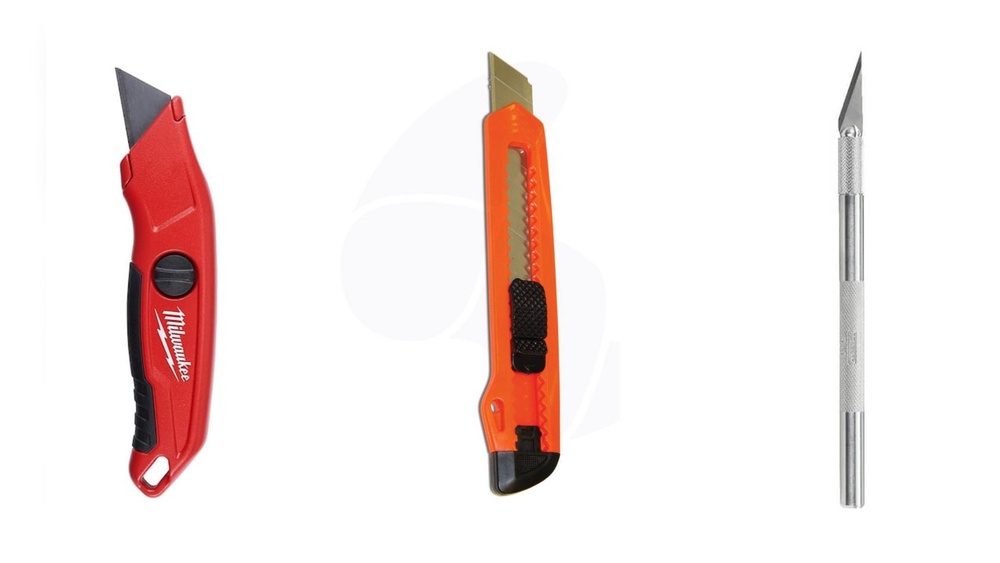
Choosing the right cutting tool can dramatically impact the efficiency, quality, and safety of your projects, whether you’re crafting, building, or managing warehouse logistics. Two of the most commonly confused yet fundamentally different tools are the box cutter and the Exacto knife. While both might seem interchangeable at a glance, their distinct features, use cases, and performance make each uniquely suited for particular tasks. Understanding the nuances between these tools can save you time, improve precision, and even prevent accidents.
This in-depth comparison will walk you through everything you need to know about box cutters and Exacto knives. Drawing on real-world examples, user experiences, and data-driven insights, we’ll examine their construction, versatility, safety profiles, and the industries where each tool excels.
By the end, you’ll be equipped to confidently choose the right cutter for your specific needs, whether you’re a warehouse manager, an artist, or a DIY enthusiast.
Key Takeaways
- Box cutters are best for heavy-duty, repetitive cutting tasks like opening packages and slicing cardboard, while Exacto knives excel in precision work such as detailed crafts and model making.
- Each tool has unique design features that affect safety, control, and blade longevity.
- The choice between a box cutter and an Exacto knife depends on your material, accuracy requirements, and frequency of use.
- Real-world examples highlight that improper tool selection can lead to inefficiency and safety risks.
- Understanding maintenance, blade replacement, and ergonomic differences is crucial for long-term user satisfaction.
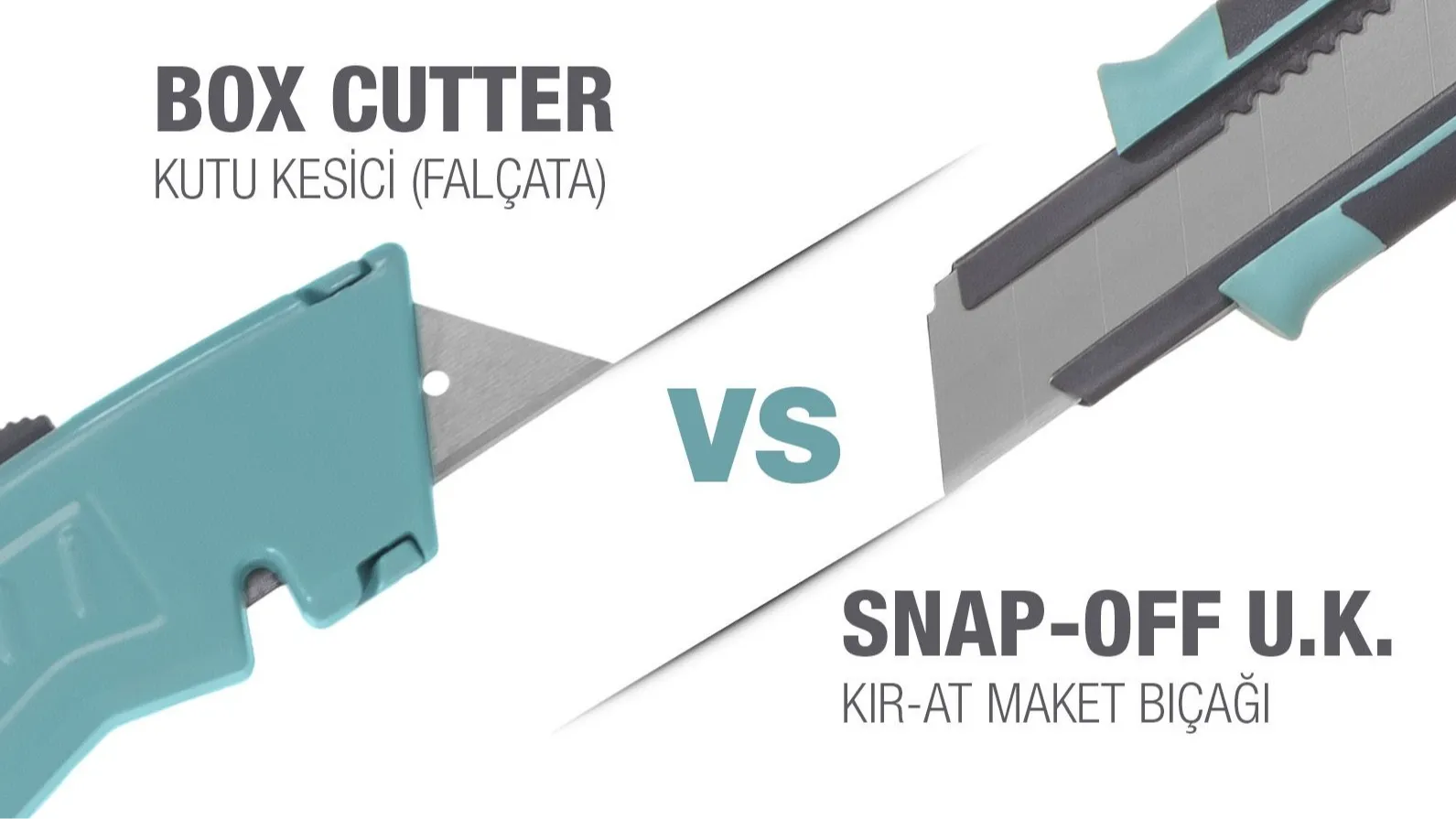
Credit: uttil.com.tr
Box Cutter Overview
Box cutters are ubiquitous in warehouses, shipping departments, and even homes. Their rugged design and retractable blades make them indispensable for high-volume cutting tasks.
Typical Design And Construction
A box cutter generally features a robust handle made from plastic or metal, housing a retractable, replaceable blade. The blade itself is usually manufactured from high-carbon steel to withstand repetitive cuts through tough materials.
Key design elements include:
- Retractable mechanism for blade safety
- Snap-off or replaceable blades for quick maintenance
- Ergonomic grip for comfortable, prolonged use
Some advanced models incorporate automatic blade retraction for added safety, or a locking mechanism to stabilize the blade during heavy use.
Best Use Cases
Box cutters shine in scenarios where speed and durability are paramount. Common applications include:
- Opening cardboard boxes in warehouses or retail
- Trimming packing tape, straps, and shrink wrap
- Cutting drywall in construction
- Removing old carpeting or flooring
Their ability to handle thick, abrasive materials makes them a favorite in environments where productivity and reliability are essential.
Blade Variants And Materials
Box cutters typically use either:
- Standard utility blades (rectangular, double-beveled)
- Snap-off blades (segmented, can be snapped to reveal a fresh edge)
Blades are often made from carbon steel, but higher-end models might use stainless steel or even ceramic for specific needs.
Durability And Maintenance
Box cutters are designed for longevity. Their blades can be swapped or snapped off, extending the tool’s life. Handles are often impact-resistant, and many are designed to withstand drops and rough handling.
Pro Tip: Always store the box cutter with the blade retracted to avoid accidental injuries and prolong blade sharpness.
Exacto Knife Overview
Exacto knives, sometimes called craft or hobby knives, are the precision instruments of the cutting world. Their slim, lightweight construction and ultra-sharp blades allow for meticulous, detailed cutting.
Typical Design And Construction
An Exacto knife is characterized by a slender, pen-like handle, often made from aluminum or plastic. The replaceable blade is held securely by a collet or twist-lock mechanism. The most common blade shape is the pointed, scalpel-like No. 11, though a variety of specialty shapes exist.
Distinctive features include:
- Fine, pointed blades for detailed work
- Lightweight, balanced handles for control
- Non-retractable design (blade always exposed when in use)
Best Use Cases
Exacto knives are the go-to tool for:
- Cutting intricate shapes in paper, cardstock, and vinyl
- Model making and scale miniatures
- Stenciling and detailed pattern cutting
- Precision trimming in graphic design and architecture
They are favored by artists, designers, and hobbyists for their unrivaled control and sharpness.
Blade Variants And Materials
Exacto knives offer a wide range of blade shapes, such as:
- No. 11 (standard pointed blade)
- Chisel blades
- Curved blades
- Scoring blades
Most blades are made from high-carbon steel for sharpness, but stainless versions exist for corrosion resistance.
Durability And Maintenance
While the blades are not as robust as box cutter blades, they are easily replaceable. The handles, if cared for, can last many years.
Pro Tip: Use a cutting mat to extend the life of your blades and improve cutting accuracy.
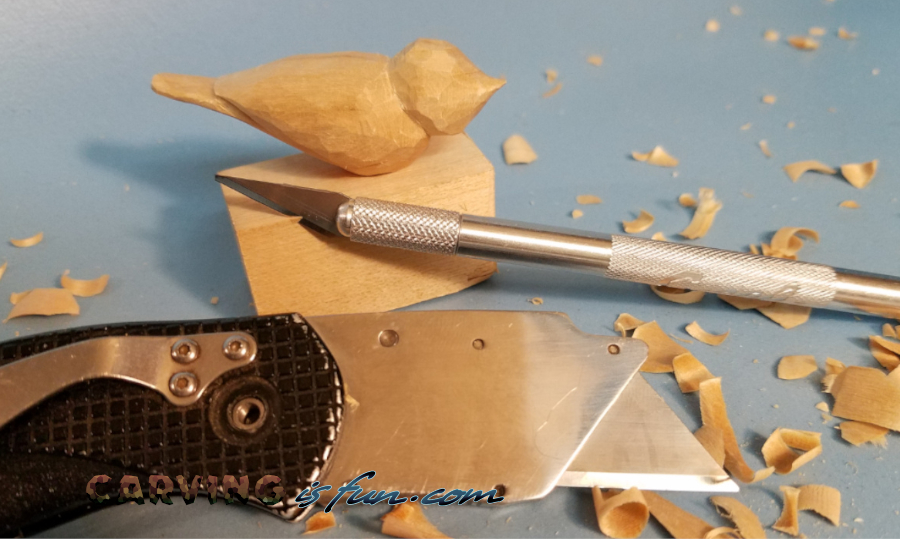
Credit: carvingisfun.com
Side-by-side Comparison: Box Cutter Vs Exacto Knife
To help visualize the critical differences, here’s a detailed comparison table:
| Feature | Box Cutter | Exacto Knife |
|---|---|---|
| Primary Use | Heavy-duty, repetitive cuts (e.g., cardboard, packaging) | Precision, detailed cutting (e.g., paper, crafts) |
| Blade Type | Rectangular, snap-off, or trapezoidal | Fine, pointed, various specialty shapes |
| Blade Material | Carbon steel, stainless steel, ceramic (rare) | High-carbon steel, stainless steel |
| Handle Design | Thick, ergonomic, often with safety features | Pen-like, lightweight, minimal safety features |
| Safety Mechanism | Retractable/locking blade | No retraction; blade exposed |
| Blade Replacement | Quick swap or snap-off | Unscrew/twist to change blade |
| Price Range | $2, $20 depending on model | $5, $25 depending on kit and blades |
| Typical Users | Warehouse staff, contractors, movers | Artists, hobbyists, designers |
This table underscores that while both tools are “cutters,” their design philosophies and core strengths cater to very different audiences.

Credit: www.sinotools.com
Performance And Precision
When choosing between a box cutter and an Exacto knife, performance and precision are critical differentiators.
Cutting Power And Material Compatibility
Box cutters are engineered for power. Their thicker blades and sturdy handles can slice through:
- Multiple layers of cardboard
- Plastic strapping
- Carpeting and insulation
- Drywall or thin sheet materials
Exacto knives, by contrast, are not suitable for heavy materials. Their fine blades may bend or break under excessive force. Instead, they excel at:
- Cutting thin, delicate materials (paper, vinyl, thin plastic sheets)
- Making intricate curves and corners
- Scoring surfaces for folding or detail work
Example: In my experience, attempting to cut dense foam board with an Exacto knife resulted in snapped blades and jagged cuts, whereas a box cutter produced a clean, straight edge.
Accuracy And Control
The Exacto knife is unrivaled in its level of control. Its pen-like form allows for:
- Tight curves and corners
- Detailed stenciling and pattern work
- Precision trimming and correction
Box cutters, though safer for high-volume work, lack the finesse for detailed applications. Their bulk and blade thickness are not suited for fine detail, but they are more stable for straight, forceful cuts.
Speed And Efficiency
For repetitive tasks, such as opening dozens of boxes, the box cutter is unmatched. The quick retraction and ergonomic grip reduce fatigue and speed up workflow.
For custom, single-item crafts, the Exacto knife is preferred, as it allows for slow, meticulous work without the risk of over-cutting.
Safety Considerations
Cutting tools are among the most common sources of workplace and hobbyist injuries. Understanding the safety profiles of box cutters and Exacto knives is essential.
Risk Factors And Injury Statistics
According to the US Bureau of Labor Statistics, lacerations from utility knives and box cutters account for over 30% of hand injuries in warehousing and manufacturing sectors (BLS). The most common causes are improper blade retraction, dull blades, and using excessive force.
Exacto knife injuries, while less frequent, are often more severe due to the exposed, razor-sharp point. These injuries typically occur in craft or design settings and often involve deep punctures or cuts to the fingers.
Built-in Safety Features
Box cutters are generally safer for repetitive use due to:
- Retractable blades that can be hidden when not in use
- Blade locks to prevent accidental extension
- Ergonomic designs that reduce hand strain and slippage
Exacto knives, with their always-exposed blade, require heightened personal responsibility. Some brands now offer caps or retractable variants, but these are not yet the industry standard.
Safe Handling And Best Practices
For both tools, adhere to these safety tips:
- Always cut away from your body
- Replace dull blades promptly
- Store tools in a secure, designated location
- Wear cut-resistant gloves for heavy-duty tasks
Warning: Never use excessive force with an Exacto knife; it increases the risk of blade breakage and injury.
Real-world Example: Warehouse Vs. Design Studio
A logistics company implemented safety training and switched from fixed-blade knives to retractable box cutters. Reported hand injuries dropped by 45% over six months. Conversely, a design studio that neglected to provide blade caps for Exacto knives saw two serious injuries in a single quarter.
Ergonomics And User Experience
Comfort and usability are often overlooked but can greatly influence tool preference and performance.
Handle Design And Fatigue
Box cutters are built for endurance. Their handles are:
- Thicker and contoured to fit the palm
- Often rubberized for better grip
- Designed to minimize fatigue during repetitive use
Exacto knives mimic the feel of a pen, making them ideal for:
- Short, precise cuts
- Detailed work where finger control is paramount
- Users accustomed to fine motor tasks
However, prolonged use of an Exacto knife can cause hand cramping due to the thin handle.
Weight And Balance
Box cutters are heavier, offering stability for forceful cuts. This weight is an advantage for slicing tough materials but may cause fatigue during prolonged use.
Exacto knives are lightweight and agile, perfect for drawing-like motion but less stable for pushing through dense materials.
Blade Change And Maintenance Ergonomics
Box cutters typically offer tool-less blade changes, often with a quick-release or snap-off mechanism. This feature is crucial in high-volume settings.
Exacto knives require unscrewing the collet, which may be fiddly and time-consuming, especially with gloved or damp hands.
Example: Artist Vs. Warehouse Worker
A graphic artist reported wrist discomfort after long periods of using an Exacto knife, resolved by switching to an ergonomic, cushioned handle. In contrast, a warehouse worker found that a rubberized box cutter reduced hand fatigue during 8-hour shifts.
Cost Analysis And Availability
Understanding the total cost of ownership and accessibility of each tool can guide budget-conscious buyers.
Initial Purchase And Ongoing Costs
Box cutters are generally inexpensive, with basic models available for under $5 and premium, safety-enhanced versions reaching $20. Replacement blades are sold in bulk at low cost.
Exacto knives are slightly pricier upfront, especially if purchasing a full kit with multiple blade types. However, the cost of replacement blades is similar, though less frequently needed in low-volume settings.
Blade Longevity
Box cutter blades, designed for abrasive materials, require frequent replacement or snapping off dull segments. In a busy warehouse, a blade may last only a day or two.
Exacto knife blades last longer when used on soft materials, often serving for dozens of projects before replacement is necessary.
Availability
Both tools and their replacement blades are widely available at:
- Hardware stores
- Art supply stores
- Online retailers
Major brands like Stanley, Olfa, and X-Acto ensure consistent quality and availability.
Example Cost Table
| Item | Box Cutter (avg.) | Exacto Knife (avg.) |
|---|---|---|
| Starter Tool | $3, $15 | $7, $20 |
| Blade Pack (10 pcs) | $2, $7 | $3, $8 |
| Estimated Annual Blade Cost (heavy use) | $40, $100 | $15, $50 |
| Availability | Very high (hardware, online) | High (art supply, online) |
For large-scale operations, box cutter blade costs can add up quickly, whereas Exacto knives are more economical for light, precision work.
Application Scenarios: Which Tool When?
Selecting between a box cutter and an Exacto knife depends entirely on your specific application. Below are common scenarios and the recommended tool.
Warehouse Operations And Shipping
- Preferred Tool: Box Cutter
- Reason: Repetitive, heavy-duty cuts; safety features essential for high-volume workflow.
Crafting And Model Making
- Preferred Tool: Exacto Knife
- Reason: Precision, control, and ability to cut intricate shapes in delicate materials.
Construction And Renovation
- Preferred Tool: Box Cutter
- Reason: Ability to handle drywall, insulation, and flooring; robust blade design.
Graphic Design And Architecture
- Preferred Tool: Exacto Knife
- Reason: Detailed trimming, stenciling, and prototyping; pen-like control.
Home Use And Diy
- Preferred Tool: Both (task-dependent)
- Reason: Box cutter for opening packages and home repairs; Exacto for crafts and detailed tasks.
Real-world Example: Diy Project
A homeowner building a custom picture frame used a box cutter for trimming mat board and an Exacto knife for cutting intricate designs into decorative paper. This combination ensured both efficiency and precision.
Maintenance And Blade Care
Proper maintenance not only extends the life of your tools but also ensures safety and cutting performance.
Cleaning And Blade Care
- Box Cutter: Wipe down the handle and blade after use, especially if exposed to adhesives or dust. Retract the blade to protect the edge.
- Exacto Knife: Remove the blade and clean the handle periodically to prevent residue build-up, which can affect grip and balance.
Blade Replacement Best Practices
- Replace blades as soon as cutting becomes difficult; dull blades are dangerous.
- Dispose of blades in a designated sharps container to prevent injuries.
- For snap-off box cutter blades, use the built-in snapper to safely break off segments.
Storage
- Store both tools in a secure, dry location.
- Use blade caps for Exacto knives to prevent accidental cuts.
- Ensure box cutter blades are fully retracted when not in use.
Environmental Impact And Sustainability
Sustainability considerations are increasingly important for both individuals and organizations.
Blade Disposal
Both box cutter and Exacto knife blades are typically made from steel and can be recycled with proper handling. Some manufacturers now offer blade recycling programs.
- Collect used blades in a dedicated container.
- Check with local recycling centers for sharps recycling protocols.
Material Efficiency
- Snap-off blades minimize waste by extending blade life.
- Exacto knives generate less waste in precision work, as fewer mistakes lead to less material discard.
Eco-friendly Options
Some brands now offer ceramic blades or handles made from recycled materials. While more expensive, they reduce environmental footprint and often last longer.
For more on sustainability in tool selection, see Sustainable Manufacturing (Wikipedia).
Frequently Asked Questions
What’s The Safest Way To Dispose Of Used Blades?
Used blades should be placed in a dedicated sharps container or a puncture-resistant tin. When full, consult your local waste management or recycling center for proper disposal. Never throw loose blades in regular trash, as they pose a risk to sanitation workers.
Can I Use A Box Cutter For Precision Craft Work?
While it’s technically possible, box cutters are not designed for intricate, fine cuts. Their blade thickness and handle size make detailed work difficult and less accurate. For best results in craft projects, use an Exacto knife or similar precision tool.
Are There Any Materials That Neither Tool Should Cut?
Both tools are intended for relatively soft or thin materials. Avoid using either tool on metal, thick wood, or glass, as this can damage the blade and cause injury. For these materials, specialized cutting tools such as saws or snips are recommended.
How Do I Maintain Blade Sharpness For Longer?
To extend blade life, always use a cutting mat when working with Exacto knives and avoid cutting over hard surfaces. For box cutters, regularly clean the blade after cutting adhesive materials and retract the blade when not in use. Replace blades at the first sign of dullness to maintain safety and performance.
Is It Possible To Sharpen Box Cutter Or Exacto Knife Blades?
While technically possible with sharpening stones or specialized tools, replacement blades are inexpensive and safer to use. Sharpening is generally not recommended, as it can compromise blade integrity and safety.
Selecting the right cutting tool is more than a matter of habit, it’s a decision that affects the quality, safety, and efficiency of your work. Box cutters and Exacto knives each bring unique strengths to the table. By understanding their key differences and optimal applications, you can enhance your workflow, minimize risk, and achieve the best possible results in your projects.
Whether you’re slicing through stacks of cardboard or crafting intricate paper art, the right tool is at your fingertips.