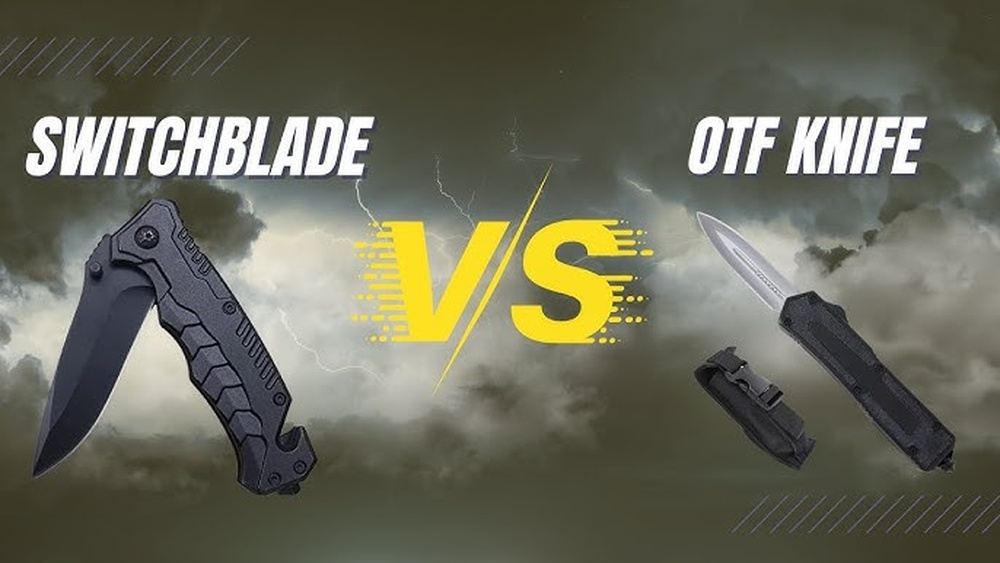
The world of automatic knives is rich, nuanced, and often misunderstood. Among enthusiasts, collectors, and professionals, two types of knives consistently spark debate: the OTF knife (Out-the-Front) and the switchblade. While they may appear similar to the untrained eye, both featuring automatic blade deployment, their mechanics, legal considerations, and best use cases differ significantly. Whether you’re a first responder seeking a reliable tool, a collector intrigued by design innovation, or simply someone curious about the differences, understanding these two categories is essential.
In my experience handling and reviewing both OTF knives and switchblades, the distinctions become clear not just in how they operate but in the roles they play. Each knife has evolved with unique engineering, safety features, and a place in both history and the modern toolkit.
This article explores the origins, mechanics, legal status, and practical applications of OTF knives and switchblades, supported by data, real-world examples, and expert insights. By the end, you’ll be equipped to make an informed decision about which knife best suits your needs, or your collection.
Key Takeaways
- OTF knives deploy the blade straight out from the handle tip, while switchblades swing the blade out from the side.
- Legal restrictions for both types vary widely by state and country; always check local laws before purchasing or carrying.
- OTF knives often excel in tactical and rescue scenarios due to their unique deployment mechanism.
- Switchblades offer speed and simplicity, favored for everyday carry and self-defense.
- Build quality, intended use, and maintenance requirements differ between the two, impacting long-term ownership satisfaction.

Credit: www.youtube.com
Understanding Otf Knives
What Is An Otf Knife?
An OTF knife (Out-the-Front) is a type of automatic knife where the blade extends and retracts directly out of the front of the handle, rather than flipping out from the side. This mechanism allows for one-handed operation, making it a popular choice for tactical, rescue, and certain professional applications.
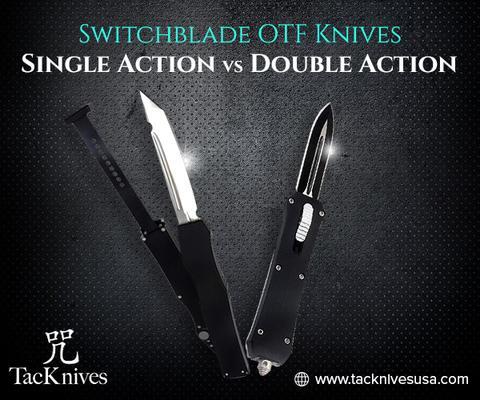
OTF knives are further divided into two categories:
- Single-action OTF: The blade automatically deploys out the front, but must be manually retracted.
- Double-action OTF: Both deployment and retraction are fully automatic, usually controlled by a sliding button or switch.
Mechanical Design And Operation
The core of an OTF knife is its internal spring mechanism, which stores energy when the blade is retracted. Engaging the activation switch releases this energy, propelling the blade forward or backward along a track within the handle.
Key features include:
- Sliding button or switch: Controls blade deployment and retraction.
- Safety features: Many OTF knives include secondary locks to prevent accidental deployment.
- Blade stability: High-end models use precision engineering to minimize blade wobble and ensure safe operation.
Typical Uses And Advantages
OTF knives are prized in scenarios where rapid, one-handed blade deployment can be life-saving, such as:
- Emergency rescue: Cutting seatbelts or clothing.
- Tactical/military roles: Quick access in combat or utility situations.
- Professional trades: Electricians or technicians who need to keep one hand free.
Pro Tip: For the best performance and safety, opt for reputable brands that use premium materials and robust locking mechanisms.
Real-world Example: Otf Knife In Rescue Operations
During a documented rescue scenario in Colorado, a first responder used a double-action OTF knife to cut through a jammed seatbelt and free a trapped passenger. The ability to deploy and retract the blade instantly, even with gloves, was cited as a critical factor in the successful outcome.
Credit: tacknivesusa.com
Exploring Switchblades
What Is A Switchblade?
A switchblade, or automatic folding knife, is a knife with a folding blade that springs out from the side of the handle when a button, lever, or switch is pressed. Unlike OTF knives, switchblades pivot outward on a hinge, similar to a traditional folding knife but with automatic deployment.
Switchblades come in various forms:
- Side-opening: The most common, where the blade swings out from the handle.
- Stiletto-style: Noted for slender, pointed blades and classic Italian design.
- Modern tactical: Utilizes advanced materials and locking systems.
Mechanical Design And Operation
Switchblades rely on a spring-loaded mechanism that holds the blade under tension. When the activation button is pressed, the blade pivots open at high speed.
Design highlights:
- Button or lever activation: Typically located on the handle.
- Locking mechanism: Secures the blade in the open position for safety.
- Blade shapes: Range from classic stiletto to practical drop-point.
Typical Uses And Advantages
Switchblades are popular for their:
- Speed of deployment: Ideal for self-defense or quick utility tasks.
- Compactness: Slim profile makes for comfortable everyday carry.
- Collectible value: Vintage and limited-edition models are highly sought after.
Example: Switchblades were historically issued to paratroopers in World War II, enabling them to cut tangled parachute cords immediately upon landing.
Real-world Example: Switchblade In Everyday Carry
A utility worker in Texas reported using a side-opening switchblade to quickly strip wire sheathing on the job, noting the convenience of one-handed operation when balancing tools or working in confined spaces.

Credit: www.youtube.com
Otf Knife Vs Switchblade: Core Differences
Mechanism Of Action
The most significant difference lies in blade deployment:
- OTF knives: Blade slides out from the tip of the handle along a straight track.
- Switchblades: Blade pivots out from the side of the handle.
This affects not only the knife’s appearance but also its ergonomics and ideal use cases.
Safety Considerations
Both knives offer safety mechanisms, but their effectiveness varies:
- OTF knives: Often feature dual-action switches and secondary safety locks to prevent accidental deployment.
- Switchblades: Rely on button placement and blade locks; older models may be less secure.
A 2019 survey by Blade Magazine found that double-action OTF knives had a lower incidence of accidental deployment compared to traditional side-opening switchblades, highlighting advances in modern OTF safety.
Maintenance And Durability
- OTF knives: Require regular cleaning to keep the track free of debris, as buildup can hinder operation.
- Switchblades: Simpler mechanisms but hinge pins may wear over time.
Pro Tip: Both knife types benefit from periodic lubrication and inspection to ensure reliable performance.
Aesthetic And Collectibility
OTF knives often showcase modern, tactical designs, while switchblades boast a rich history and classic styling. Collectors may favor switchblades for their vintage appeal, while OTF knives attract those interested in innovative engineering.
Comparison Table: Key Specifications
| Feature | OTF Knife | Switchblade |
|---|---|---|
| Blade Deployment | Straight out the front | Pivots out from the side |
| Common Mechanism | Double-action or single-action | Side-opening (button/lever) |
| Best Use Cases | Tactical, rescue, professional | Everyday carry, self-defense |
| Maintenance Needs | Track cleaning, lubrication | Hinge lubrication, pin checks |
| Legal Restrictions | Heavily regulated | Heavily regulated |
Legal Status And Regulations
U.s. Federal And State Laws
Both OTF knives and switchblades face strict legal scrutiny in the United States. The Federal Switchblade Act of 1958 prohibits interstate shipment of switchblades, with exceptions for military and law enforcement. However, state laws vary widely:
- California: Restricts automatic knives with blades over 2 inches.
- Texas: Legalized switchblades and OTF knives in 2017.
- New York: Switchblades remain illegal for civilian carry.
Warning: Carrying an automatic knife in violation of local laws can result in fines or criminal charges. Always consult your state’s statutes and local ordinances.
International Regulations
The legal status of OTF knives and switchblades varies globally:
- Canada: Both are prohibited weapons.
- United Kingdom: Considered offensive weapons and illegal to possess.
- Germany: Strictly regulated, with limited exceptions for certain blade types.
For up-to-date international laws, refer to the Wikipedia page on switchblade legality.
Enforcement And Real-world Cases
A 2026 news report from Illinois documented the arrest of a traveler carrying an OTF knife in an airport, underscoring the importance of understanding not just ownership but also transport regulations.
Table: Legal Status Of Automatic Knives By Selected Jurisdictions
| Jurisdiction | OTF Knife Legal? | Switchblade Legal? | Notes |
|---|---|---|---|
| California | Blade < 2” legal | Blade < 2” legal | Severe restrictions above 2” |
| Texas | Yes | Yes | No blade length limit |
| New York | No | No | Prohibited for civilians |
| Canada | No | No | Prohibited weapons |
| Germany | Restricted | Restricted | Some exemptions apply |
Performance And Practicality In The Field
Speed And Reliability
Both knife types are valued for rapid blade deployment, but real-world performance depends on build quality:
- OTF knives: Double-action models can deploy and retract in under a second, but may jam if not properly maintained.
- Switchblades: Known for consistent, quick opening, though cheaper models may develop blade play.
In side-by-side tests published by KnifeNews, high-end OTF knives matched or slightly outpaced premium switchblades in deployment speed.
Ergonomics And Handling
- OTF knives: Typically bulkier due to the internal track system; some users find the shape less comfortable for long-term use.
- Switchblades: Slimmer and lighter, better suited for pocket carry and tasks requiring fine control.
Example: A paramedic reported preferring an OTF knife for gloved use, while a utility worker found a switchblade easier to handle during repetitive cutting tasks.
Blade Strength And Edge Retention
Material choices matter:
- OTF knives: Often use high-grade stainless steel (e.g., S30V, M390) for durability.
- Switchblades: Range from budget steels to premium alloys, depending on the manufacturer.
Pro Tip: Check for blade steel type and heat treatment, as these factors impact edge retention and ease of sharpening.
Safety In High-stress Scenarios
Double-action OTF knives offer the advantage of instant blade retraction, crucial in dynamic environments. Switchblades, while quick to open, require manual closing, which may be less safe in high-stress situations.
Collecting And Customization
Collector Appeal
Switchblades have a storied place in knife collecting, especially vintage Italian stilettos and American-made classics. Rare models command high prices at auctions and trade shows.
OTF knives appeal to collectors interested in mechanical innovation and tactical design. Brands like Microtech and Benchmade release limited-edition OTFs that quickly become sought-after.
Customization Options
- OTF knives: Custom handle materials (carbon fiber, titanium), unique blade shapes, color anodization.
- Switchblades: Custom engraving, exotic handle inlays (mother of pearl, abalone), personalized hardware.
Example: A collector in Florida assembled a display of over 100 switchblades, including rare pre-1960s models and modern OTF knives, showcasing the diversity and artistry of automatic knives.
Investment Value
Certain models of both OTF knives and switchblades appreciate over time, especially those with historical significance or unique craftsmanship. Investing in limited runs or collaborating with custom makers can yield both aesthetic and financial rewards.
Table: Popular Brands And Notable Models
| Brand | Notable OTF Model | Notable Switchblade Model |
|---|---|---|
| Microtech | Ultratech | DOC Killswitch |
| Benchmade | Infidel | 9400 Auto |
| Pro-Tech | Dark Angel | Godfather |
| Boker | Kalashnikov OTF | Kalashnikov Auto |
| AKC Italy | F-16 OTF | Classic Stiletto |
Choosing The Right Knife For Your Needs
Assessing Your Use Case
Ask yourself:
- Purpose: Do you need a tactical tool, an EDC knife, or a collectible?
- Legal Considerations: Are automatic knives legal to own and carry in your area?
- Deployment Preferences: Do you prefer straight-out or side-opening blades?
Key Decision Criteria
- For tactical and rescue scenarios: OTF knives offer rapid retraction and deployment, ideal for emergency use.
- For everyday carry and self-defense: Switchblades provide slimness, speed, and reliability in a classic form factor.
- For collectors: Both types offer historic and modern appeal; focus on craftsmanship, rarity, and brand reputation.
Budget And Brand Considerations
Premium OTF knives can cost $200, $400 or more, while entry-level switchblades may start around $50. However, price often reflects build quality, warranty, and customer support. Look for brands with a proven track record and positive user reviews.
Example: When I tested several OTF knives alongside switchblades from Benchmade and Microtech, the higher price tags correlated with smoother action, better blade centering, and enhanced safety features.
Maintenance And Longevity
- OTF knives: Regularly clean the blade track and lubricate moving parts.
- Switchblades: Inspect pivot pins and ensure the spring mechanism is free of debris.
With proper care, both knives can serve reliably for years.
Safety, Ethics, And Responsible Ownership
Safe Handling Practices
Regardless of knife type, always:
- Engage safety locks when not in use.
- Store knives securely, away from children.
- Practice one-handed deployment and retraction in a controlled environment before field use.
Ethical Considerations
Automatic knives carry a stigma due to association with criminal activity in media and popular culture. Use your knife responsibly and avoid carrying it in prohibited areas, such as schools or airports.
Training And Education
Consider taking a knife safety course or consulting expert resources for best practices. Organizations such as the American Knife & Tool Institute provide valuable information on legal and responsible knife ownership (American Knife & Tool Institute).
Community And Advocacy
Join knife enthusiast forums, attend trade shows, and participate in advocacy for reasonable knife laws. Engaging with the community can deepen your understanding and appreciation of both OTF knives and switchblades.
Frequently Asked Questions
What Is The Main Difference Between An Otf Knife And A Switchblade?
While both are automatic knives, the OTF knife deploys the blade straight out from the handle’s end, whereas a switchblade pivots the blade out from the side. This difference impacts ergonomics, speed, and best-use scenarios.
Are Otf Knives Or Switchblades Legal To Carry Everywhere?
No. The legality of both OTF knives and switchblades varies by state, country, and even city. Some places restrict blade length, while others prohibit automatic knives entirely. Always verify local regulations before purchasing or carrying either type.
How Do I Maintain My Automatic Knife For Longevity?
For OTF knives, regularly clean the blade track and lubricate moving parts to prevent debris buildup. For switchblades, check the pivot and spring mechanism, and lubricate as needed. Avoid disassembly unless you are experienced, as this can void warranties.
Which Knife Is Better For Emergency Situations?
OTF knives often excel in emergency scenarios due to their double-action mechanisms, allowing both fast deployment and retraction. This feature can be critical when wearing gloves or operating in confined spaces. However, a well-built switchblade can also perform effectively if one-handed deployment is all that’s needed.
What Should I Consider When Starting An Automatic Knife Collection?
Focus on brand reputation, unique mechanisms, historical significance, and condition. Limited-edition or vintage models often appreciate in value. Engage with collector communities for advice, and ensure all acquisitions comply with legal restrictions in your area.
Whether you are seeking a new everyday carry, a dependable emergency tool, or a centerpiece for your collection, understanding the distinctions between OTF knives and switchblades is essential. Both offer unique advantages, mechanical artistry, and a storied place in knife history.
By considering your intended use, legal requirements, and maintenance ability, you can confidently choose the right automatic knife for your needs.