
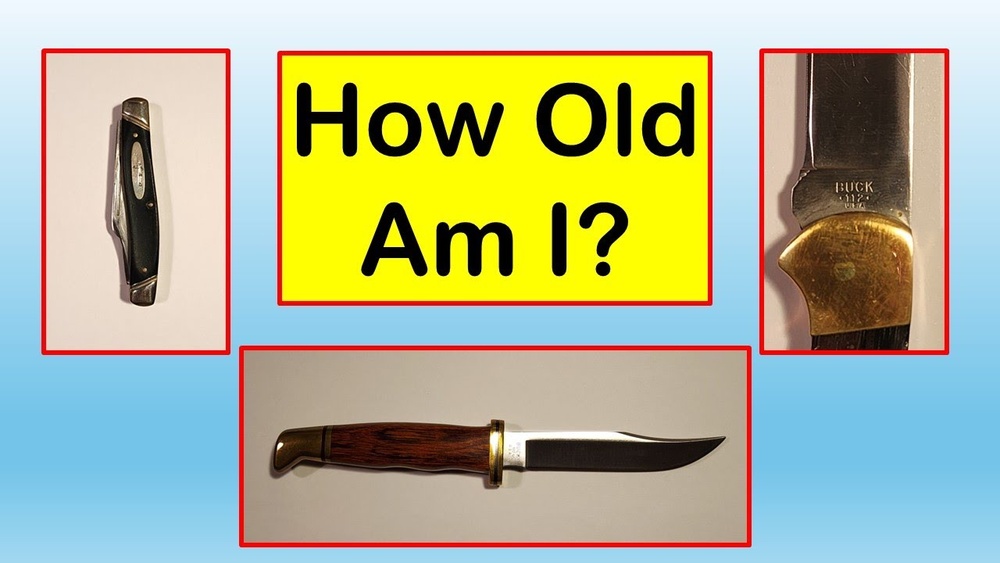
Many knife enthusiasts, collectors, and outdoorsmen find themselves asking, “How old is my Buck Knife? ” Whether you inherited a classic 110 Folding Hunter from your grandfather, picked up a vintage model at a flea market, or simply want to know more about the tool in your pocket, understanding the age and history of your Buck Knife can deepen your appreciation for its craftsmanship and value.
Buck Knives have been a symbol of American quality and outdoor tradition for over a century, and their robust construction means many are still in use decades after production.
This guide covers everything you need to accurately date your Buck Knife, including detailed explanations of tang stamps, model variations, and production changes. You’ll find step-by-step instructions, real-world examples, comparison tables, and tips for researching your knife’s unique story. Whether you’re a serious collector or a casual owner, this article provides an authoritative roadmap to identifying your Buck Knife’s age and understanding its place in the rich heritage of American cutlery.
Key Takeaways
- Buck Knives have used distinct tang stamps and codes since the 1960s, making dating possible for most knives.
- The model number, tang stamp style, and logo are essential clues for determining the production era of your knife.
- Condition, rarity, and age all impact your Buck Knife’s collectible value.
- Several online resources and forums offer detailed tang stamp charts and expert insights.
- Real-world examples and data tables in this article make it easy to identify your knife’s age.
- Owners can increase value by preserving original features and documenting provenance.
The History Of Buck Knives And Production Eras
Understanding the timeline of Buck Knives provides crucial context for dating your blade. The company’s innovations, logo changes, and manufacturing milestones have left unique marks on each knife.
Early Beginnings (1902, 1961)
Buck Knives began in 1902 when Hoyt Buck crafted his first knife in Kansas. However, it wasn’t until 1947 that Hoyt and his son Al Buck officially founded Buck Knives in San Diego, California. Early Buck knives were handmade, lacking standardized markings.
From 1902 until the early 1960s, few knives bore any tang stamp or logo. These hand-forged models are rare and prized among collectors. If your knife lacks any identifiable markings, it may be a very early or custom Buck.
The Introduction Of Tang Stamps (1961, 1972)
In 1961, Buck Knives launched its first mass-produced folding hunter, the Model 110. This era marked the beginning of regular tang stamping, with “BUCK” stamped in block letters on the blade.
- 1961, 1967: Stamps read simply “BUCK”
- 1967, 1972: Stamps read “BUCK USA” as manufacturing scaled up
Knives from this period are highly sought after, especially early 110 models, due to their place in American knife history.
Modernization And Date Codes (1972, 1986)
In 1972, Buck Knives began stamping model numbers on blades, beginning with “110” for the iconic folding hunter. By 1986, the company introduced a formal date code system, allowing for precise dating.
- 1972, 1985: Stamps include “BUCK 110 USA”
- 1986 onward: Introduction of date symbols and annual codes
This period also saw the introduction of new models, production techniques, and changes in handle materials.
Recent Production (1986, Present)
Since 1986, Buck Knives has used a system of symbols and letters beside the tang stamp to indicate the year of manufacture. This system, updated periodically, allows owners to date their knives to the exact year.
- 1986, 1992: Simple symbols (dots, triangles, etc.)
- 1993, 2001: Introduction of letters (A, Z)
- 2002, Present: Letters continued, with occasional logo and font changes
Buck Knives maintains a comprehensive chart of these date codes on their official website.
Credit: westernhunter.net
How To Identify Your Buck Knife’s Age: Step-by-step Guide
Determining the age of a Buck Knife involves analyzing several physical features and comparing them to known production data.
Step 1: Examine The Tang Stamp
The tang stamp is the most reliable indicator of age. Located at the base of the blade near the handle, it typically includes the Buck logo, model number, and a date code.
- No stamp: Likely pre-1961 or custom
- “BUCK” only: 1961, 1967
- “BUCK USA”: 1967, 1972
- “BUCK 110 USA” or similar: 1972, 1986
- Date code symbols/letters: 1986, present
Use a magnifying glass for clarity, as older stamps may be worn.
Step 2: Identify The Model Number
Most Buck Knives produced after 1972 have a model number stamped on the blade (e.g., 110, 119, 112).
- Pre-1972: May lack a model number
- Post-1972: Model number present
This helps narrow down the production window.
Step 3: Check For Date Codes
From 1986 onward, Buck introduced annual date codes. These may be dots, triangles, or letters adjacent to the model number.
- Symbol codes (1986, 1992): Each shape represents a year.
- Letter codes (1993, present): “A” = 1993, “B” = 1994, etc.
Refer to the Buck Knives official chart for precise dating.
Step 4: Inspect Handle Materials And Construction
Handle materials and design can provide additional clues.
- Early knives: Wood, stag, or micarta handles
- 1970s, 1980s: Introduction of synthetic materials (phenolic, plastic)
- Modern knives: Variety of modern composites and micarta
Compare your knife to catalog images from the relevant era.
Step 5: Review The Knife’s Box And Paperwork
Original packaging and paperwork often include clues about production year, such as price lists, warranty cards, or model descriptions. Compare these details to archived Buck catalogs.
Step 6: Consult Online Resources
Use reliable online tang stamp charts, such as those found on the official Buck Knives website or trusted forums like BladeForums.
Pro Tip: Take clear photos of your knife and post them on dedicated collector forums for additional expert insights.
Buck Knife Tang Stamps: Comprehensive Comparison Table
To help you quickly compare and date your Buck Knife, use this reference table summarizing key tang stamp variations from the 1960s to today:
| Years | Tang Stamp Example | Date Code | Notes |
|---|---|---|---|
| 1961, 1967 | BUCK | None | Earliest production, no model number |
| 1967, 1972 | BUCK USA | None | Pre-model numbering |
| 1972, 1986 | BUCK 110 USA | None | Model number introduced |
| 1986, 1992 | BUCK 110•USA | Symbol (dot, triangle, etc.) | Symbols indicate year |
| 1993, 2001 | BUCK 110X USA | Letter (A-Z) | A = 1993, B = 1994, etc. |
| 2002, Present | BUCK 110Y USA | Letter (Y, Z, etc.) | Ongoing letter system |

Credit: www.youtube.com
Notable Buck Knife Models And Their Production Timelines
Some Buck Knife models have unique features, stories, or variations that make them especially interesting to date.
Buck 110 Folding Hunter
First introduced in 1963, the 110 Folding Hunter remains one of the most popular folding knives in history. Early 110s (1963, 1972) have fewer markings and brass bolsters, while post-1972 models feature model numbers and more robust construction.
- Early models: Wood handles, squared bolsters
- 1970s, 1980s: Rounded bolsters, phenolic handles
- Modern: Variety of handle materials, advanced steels
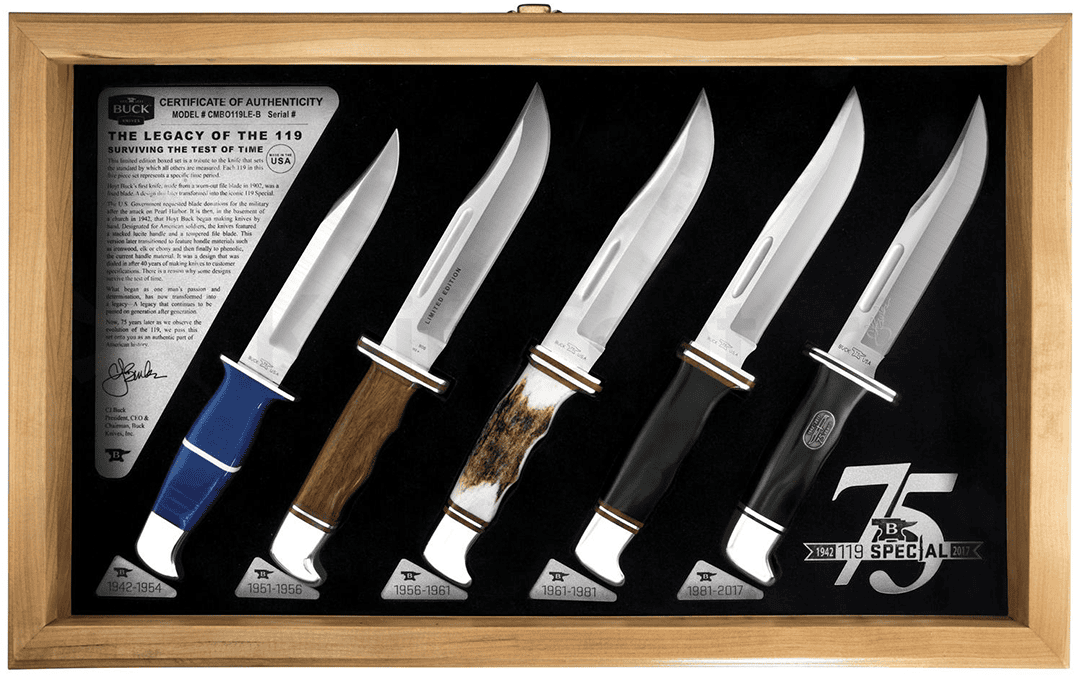
Buck 119 Special
The Buck 119 fixed blade has been in continuous production since the 1940s, with tang stamps evolving similarly to the 110. Early models may lack model numbers and have different sheath designs.
- Pre-1972: No model number, “BUCK” or “BUCK USA” stamp
- 1972, present: “BUCK 119 USA” with date codes
Buck 112 Ranger
A smaller version of the 110, the 112 Ranger debuted in the early 1970s. Its date codes and tang stamps mirror the 110’s changes.
- Early models: Wood handles, “BUCK USA” stamp
- Later models: Phenolic handles, model numbers, date codes
Limited Editions And Custom Shop Knives
Buck’s Custom Shop produces small runs with unique materials and engravings. These often have special tang stamps or serial numbers and may include certificates of authenticity. Production years are typically documented in Buck’s annual catalogs or custom order records.
Case Studies: Real-world Examples Of Buck Knife Dating
Nothing illustrates the process better than real-world examples. Here are three cases where owners identified the age and history of their Buck Knives:
Example 1: Vintage Buck 110 With “buck” Tang Stamp
A collector found a folding hunter with only “BUCK” stamped on the tang and no model number. The handle was wood with squared brass bolsters.
Analysis: Based on the tang stamp and construction, this knife was produced between 1963 and 1967, making it an early 110 Folding Hunter. These models are rare and command premium prices among collectors.
Example 2: Buck 119 With Triangle Date Code
An outdoorsman discovered a Buck 119 Special with the tang stamp “BUCK 119 ▲ USA. ” The handle was black phenolic, and the sheath was stitched leather.
Analysis: According to Buck’s date code chart, the triangle symbol corresponds to a knife made in 1988. The model and handle material match catalog photos from that year.
Example 3: Modern Buck 112 With Letter Code
A user purchased a Buck 112 with “BUCK 112 R USA” on the tang. The handle is modern micarta.
Analysis: The letter “R” in Buck’s system indicates production in 2018. The micarta handle confirms it’s a recent model.
Understanding Buck Knife Value: Collectibility And Rarity
The age of your Buck Knife can influence its value and desirability among collectors, but other factors play a role as well.
Key Value Drivers
- Condition: Mint, unused knives with original boxes and paperwork fetch the highest prices.
- Rarity: Limited editions, discontinued models, and early production runs are especially valuable.
- Provenance: Documentation or a known history (e.g., military use, celebrity ownership) adds to value.
- Original features: Replacement parts or refinished blades can decrease collectible value.
Typical Price Ranges
While prices fluctuate, here’s a general guide for the most common Buck models by age and condition:
| Model | Era | Condition | Estimated Value (USD) |
|---|---|---|---|
| 110 Folding Hunter | 1960s | Mint | $300, $600 |
| 110 Folding Hunter | 1980s | Excellent | $100, $200 |
| 119 Special | 1970s | Good | $80, $150 |
| 112 Ranger | 1990s | Very Good | $60, $120 |
| Custom Shop | Any | Mint | $250, $1000+ |
Example: A pristine, early 1960s Buck 110 with box and paperwork recently sold for over $550 on a reputable auction site.
How To Maximize Value
- Store your knife in a dry, cool environment to prevent rust.
- Avoid polishing or replacing original parts unless necessary.
- Retain all original packaging, paperwork, and accessories.
For more on knife valuation, the Wikipedia article on collectible knives is a useful resource.
Research Tools And Resources For Dating Your Buck Knife
Several resources can help you accurately date and document your Buck Knife:
Official Buck Knives Date Code Chart
Buck Knives provides a comprehensive date code chart on their website, detailing all symbols and letters used since 1986. This should be your first stop for modern knives.
- Visit the official Buck Knives website for the current chart.
Collector Forums And Communities
Online forums such as BladeForums and the Buck Collectors Club offer decades of collective expertise. Posting clear photos and questions often yields quick, accurate responses.
Reference Books And Catalogs
Books like “The Story of Buck Knives” by Tom Ables and annual Buck catalogs are excellent resources for identifying rare models and production changes.
Auction Listings And Price Guides
Auction sites and price guides can help estimate value based on recent sales of similar knives.
Pro Tip: When researching, cross-reference multiple sources to confirm findings, as some details may vary between resources.
Common Pitfalls And Misconceptions When Dating Buck Knives
Mistakes are common when attempting to date or value a Buck Knife. Here’s how to avoid the most frequent errors.
Misinterpreting Tang Stamps
Not all tang stamps are unique to a single year. Some were used for multiple years, especially during transitions. Always verify with an updated chart.
Assuming All Old Knives Are Valuable
Age alone doesn’t guarantee high value. Condition, rarity, and provenance matter just as much. A heavily used 1970s knife may be worth less than a mint 1990s limited edition.
Overlooking Custom Or Modified Knives
Custom shop knives or those modified after purchase (rehandled, rebladed) may not match standard dating guides. Look for unique serial numbers or certificates.
Believing All “buck” Knives Are Authentic
Counterfeit knives exist, especially for popular models. Compare your knife to catalog photos and consult forums if authenticity is in doubt.
Example:
In my experience, I once acquired a “BUCK 110” at a swap meet with an unfamiliar tang stamp. After consulting both the official chart and expert collectors online, I discovered it was a 1975 variant with a factory error in the stamp, a rare and valuable find.
How Buck Knives’ Manufacturing Changes Affect Identification
Manufacturing changes at Buck’s factories over the decades have left subtle but important clues for dating knives.
Factory Locations
- San Diego, CA (1947, 1980): Most early knives were produced here.
- El Cajon, CA (1980, 2000): Transitioned to larger-scale production.
- Post Falls, ID (2000, present): Modern knives are made here.
Factory location can sometimes be found on the box or paperwork, and rarely on the blade.
Steel Types And Blade Markings
Buck Knives have used several steel types, including 440C, 425M, and 420HC. Sometimes, the steel type is stamped on the blade, helping to narrow production years.
- 440C: Used 1972, 1981
- 425M: Used 1981, 1992
- 420HC: Used 1993, present
Changes In Construction
Minor changes in handle shape, rivet placement, and sheath design can help differentiate production eras, especially for the 110 and 112 models.
| Feature | 1960s, 1970s | 1980s, 1990s | 2000s, Present |
|---|---|---|---|
| Handle Material | Wood, micarta | Phenolic, composite | Micarta, G10, exotic woods |
| Rivets | Brass | Stainless, brass | Stainless, hidden pins |
| Sheath | Stitched leather | Embossed logo, snap | Molded plastic, nylon |
Frequently Asked Questions
How Can I Tell If My Buck Knife Is Authentic?
Look for crisp tang stamps, accurate model numbers, and quality construction. Counterfeit knives often have misspelled markings, poor fit and finish, or unusual materials. Compare your knife to photos from the official Buck Knives website or contact Buck’s customer service for verification. For rare or valuable models, consider a professional appraisal.
What Do I Do If My Knife Has No Tang Stamp?
Knives without tang stamps are typically pre-1961 or custom shop creations. Check for other clues, such as handle material, sheath design, and overall construction. Posting photos on collector forums or consulting reference books can help narrow the production era. If you suspect it’s a very early Buck, document its details carefully, as it may be valuable.
Are Buck Knives Made Outside The Usa?
The vast majority of Buck Knives are produced in the United States, primarily in Post Falls, Idaho. However, some lower-priced models and special editions have been manufactured overseas. These are clearly marked with the country of origin. For collectors, US-made knives are generally more desirable.
Can I Order Replacement Parts For A Vintage Buck Knife?
Buck Knives offers an extensive warranty and can repair or refurbish many vintage knives. Replacement blades, handles, and sheaths are available for certain models. However, replacing original parts may reduce collectible value. Always consult Buck’s customer service before sending in a valuable or rare knife.
Where Can I Find More Information On Buck Knife History And Models?
For in-depth research, visit the Buck Knives official website, join forums like BladeForums or the Buck Collectors Club, and consult reference books such as “The Story of Buck Knives.” Auction sites and BladeForums also provide useful insights on current market values and rare models.
Buck Knives are more than just tools, they are pieces of American history, cherished by outdoorsmen, collectors, and families for generations. Understanding the age and story behind your Buck Knife adds to its appeal and helps preserve its legacy. With the information in this guide, you can confidently date, document, and care for your Buck Knife, ensuring it remains a valued companion for years to come.