
Opening a pocket knife may seem straightforward, but mastering this small tool demands a blend of technique, safety awareness, and respect for its sharp functionality. Whether you’re an outdoor enthusiast, a craftsman, or simply someone who values preparedness, understanding how to properly open a pocket knife is essential.
Incorrect handling can lead to injuries, while proper technique ensures both effectiveness and longevity of your tool.
The world of pocket knives is rich with variety, from traditional slip joints to modern assisted-openers and tactical folders. Each design brings its own mechanism, safety requirements, and ideal use cases. By grasping the nuances of different knife types and opening methods, you’ll not only protect yourself and others but also get the most out of your pocket knife in daily life.
This guide breaks down every critical aspect, from tool anatomy and opening techniques to maintenance and legal considerations, ensuring you approach this everyday carry item with confidence and competence.
Key Takeaways
- Pocket knives come in various designs, each with unique opening mechanisms requiring specific handling techniques.
- Safety is paramount, always follow best practices and understand your knife’s features before use.
- Maintenance and proper storage significantly extend the life and reliability of your pocket knife.
- Legal restrictions can vary by region; always check local regulations before carrying or using your knife.
- Practice with different opening styles helps build proficiency and reduces the risk of accidents.

Credit: www.youtube.com
Understanding Pocket Knife Types And Mechanisms
Pocket knives are not created equal, understanding their differences is foundational to safe and efficient use. The mechanism that governs how the knife opens and locks directly influences handling, maintenance, and safety protocols.
Traditional Slip Joint Knives
Slip joint knives are among the oldest and most widely recognized types. These knives do not lock; instead, a spring holds the blade open or closed. The lack of a true locking mechanism means extra care is required during use, as the blade can accidentally close.
- Example: The classic Swiss Army Knife.
- Typical use: Everyday tasks, small-scale cutting, and as a general utility tool.
Lockback Knives
A lockback knife features a spine-mounted locking bar that engages a notch in the blade’s tang, securing it firmly when open. To close, you must depress the exposed part of the locking bar, usually at the handle’s rear.
- Pro Tip: Always use two hands to close a lockback knife, keeping fingers clear of the blade’s path.
Liner Lock And Frame Lock Knives
Both liner and frame locks use part of the handle to secure the blade when open. The liner lock uses a leaf-spring-type liner inside the handle, while the frame lock relies on the handle’s actual frame.
- Example: Many modern tactical folding knives.
- Benefit: One-handed opening and closing, often with thumb studs or flippers for convenience.
Assisted-opening And Automatic Knives
Assisted-opening knives use spring mechanisms that help deploy the blade once you start the opening motion. Automatic, or “switchblade,” knives open at the press of a button, powered entirely by a spring.
- Warning: Automatic knives are subject to strict legal restrictions in many jurisdictions.
Multi-tool Knives
Multi-tools incorporate several blades and tools into a single unit. Opening requires understanding the specific mechanisms for each implement.
- Example: Leatherman multi-tools.
Comparison Table: Key Pocket Knife Types
| Knife Type | Opening Mechanism | Locking Mechanism | One-Handed Operation | Typical Use |
|---|---|---|---|---|
| Slip Joint | Nail nick/manual | None (spring tension) | No | Light tasks, EDC |
| Lockback | Manual/thumb hole | Back lock bar | Sometimes | General utility |
| Liner Lock | Thumb stud/flipper | Liner spring | Yes | Tactical, EDC |
| Frame Lock | Thumb stud/flipper | Frame bar | Yes | Heavy-duty, tactical |
| Assisted-Open | Spring-assisted | Varies | Yes | Quick deployment |
| Automatic | Button/switch | Internal lock | Yes | Specialty, law enforcement |
| Multi-Tool | Manual/nail nick | Varies | Sometimes | Versatile, outdoors |

Credit: www.youtube.com
Anatomy Of A Pocket Knife
A clear understanding of pocket knife anatomy builds the foundation for safe operation and effective maintenance. Every component serves a specific function, affecting the knife’s performance and user experience.
Blade
The blade is the cutting component, often made from stainless or high-carbon steel. The blade’s shape, edge grind, and length dictate its suitability for various tasks.
- Common shapes: Drop-point, clip-point, tanto, and spear-point.
Handle
Handles are constructed from materials like G10, titanium, aluminum, wood, or synthetic polymers. The handle’s ergonomics impact grip security and comfort during opening and use.
Pivot
The pivot is the joint where the blade rotates. Smooth pivots allow for easier opening and closing and may include ball bearings or washers for reduced friction.
Locking Mechanism
As detailed earlier, the lock ensures the blade stays open during use. Its type determines closure safety and method.
Opening Aid
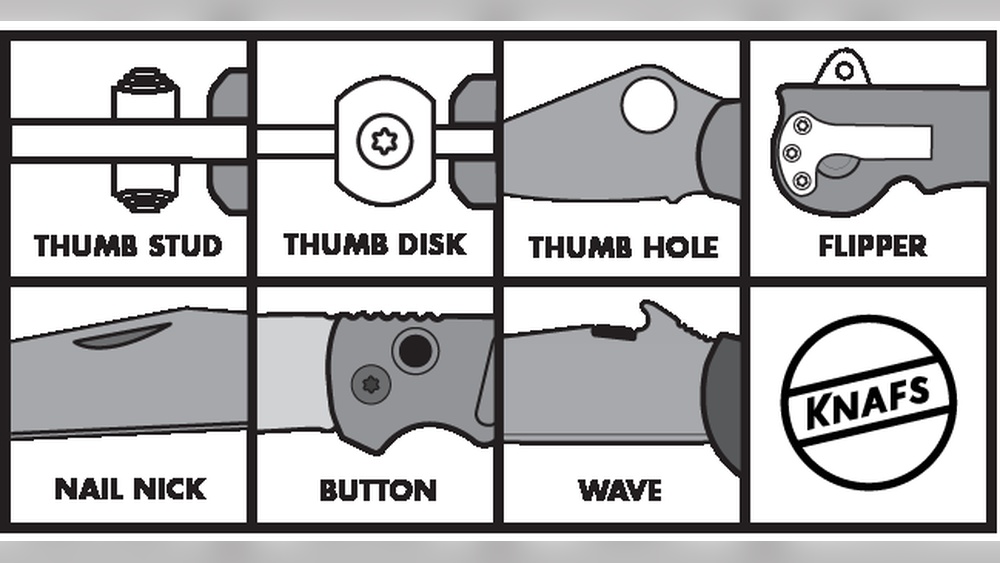
Many modern knives feature aids such as thumb studs, flipper tabs, or nail nicks to facilitate opening. These features are critical for one-handed operation.
Pocket Clip
A pocket clip is attached to the handle for secure, accessible carry. Some are reversible for left/right-handed use.
Case Study: Anatomy In Action
When I tested the Benchmade Griptilian (a popular liner lock), I found the thumb stud and smooth pivot allowed for seamless one-handed opening, while the textured handle provided excellent grip, even with wet hands. The robust locking mechanism gave me confidence when applying force during use.
Step-by-step: How To Open Different Types Of Pocket Knives
Opening a pocket knife correctly depends on its design. Follow these step-by-step instructions for the most common types, always prioritizing safety and control.
Opening A Slip Joint Knife
- Hold the handle securely in your dominant hand.
- Locate the nail nick on the blade.
- Insert your thumbnail into the nick and pull the blade out slowly.
- Rotate the blade to the open position until it clicks into place (spring tension holds it).
- Ensure the blade is fully extended before use.
- Warning: Avoid placing fingers between the handle and blade path to prevent pinching.
Opening A Lockback Knife
- Grip the knife handle firmly.
- Find the nail nick or thumb hole on the blade.
- Use your thumbnail or thumb to begin opening the blade.
- Continue rotating the blade until you hear the distinct click of the locking bar engaging.
- Double-check that the lock is engaged by gently pressing on the blade’s spine.
Opening A Liner Lock Or Frame Lock Knife
- Hold the handle in your dominant hand, avoiding the lock bar during opening.
- Place your thumb on the thumb stud or index finger on the flipper tab.
- Apply pressure to deploy the blade smoothly. Many modern knives allow for fast, one-handed opening.
- Listen/feel for the lock to engage. The blade should not move under pressure.
Opening An Assisted-opening Knife
- Grip the handle with your dominant hand.
- Engage the thumb stud or flipper tab with moderate force.
- Allow the assisted mechanism to complete blade deployment.
- Confirm the blade is locked before use.
- Pro Tip: Practice opening with both hands for versatility.
Opening An Automatic (switchblade) Knife
- Hold the knife firmly.
- Locate the activation button or switch.
- Press the button; the blade will deploy rapidly.
- Check the lock before handling.
- Warning: Know your local laws before carrying or using automatic knives.
Opening Multi-tool Blades
- Grip the multi-tool body.
- Use your fingernail to access the desired blade or implement.
- Slowly rotate the tool outward.
- Lock in place if your multi-tool features blade locks.
Quick-reference Table: Opening Methods
| Knife Type | Opening Aid | Hand(s) Needed | Lock Engagement |
|---|---|---|---|
| Slip Joint | Nail nick | Two | Spring only |
| Lockback | Nail nick/thumb hole | Usually two | Back lock |
| Liner/Frame Lock | Thumb stud/flipper | One | Liner/frame lock |
| Assisted-Open | Flipper/thumb stud | One | Varies |
| Automatic | Button | One | Internal lock |
| Multi-Tool | Nail nick | Two | Varies |

Credit: www.youtube.com
Essential Safety Practices
Operating a pocket knife safely is non-negotiable. A lapse in attention or improper technique can result in serious injury. Following best practices ensures both personal safety and responsible knife ownership.
General Safety Guidelines
- Always open a pocket knife away from your body and others.
- Keep fingers clear of the blade’s path.
- Inspect the knife for damage or debris before opening.
- Never use excessive force; if the blade is stuck, clean and lubricate the pivot.
Handling In Public
- Discreetly open your knife only when necessary.
- Avoid sudden or theatrical movements that may alarm bystanders.
- Respect local customs and sensitivities regarding knife use.
Storage And Transportation
- Store knives in a closed, locked position when not in use.
- Use a sheath, pouch, or pocket clip to prevent accidental opening.
- When traveling, adhere to TSA and local regulations regarding knives.
First Aid Preparedness
- Keep a basic first aid kit nearby when using knives for extended tasks.
- Know how to treat cuts and punctures: Clean the wound, apply pressure, and seek medical attention if necessary.
Example: Safe Use Scenario
During a camping trip, I observed a fellow camper open a liner lock knife without checking for debris in the pivot. The blade stuck halfway, and he applied excessive force, resulting in a sudden snap and a minor finger injury.
This incident reinforced the importance of keeping your knife clean and opening it with caution.
Maintenance And Troubleshooting
Proper maintenance not only ensures the smooth operation of your pocket knife but also extends its lifespan and safety.
Cleaning Your Pocket Knife
- Disassemble the knife if possible (consult the manufacturer’s guidelines).
- Wipe down the blade and handle with a soft cloth.
- Use a toothbrush to remove debris from the pivot and locking mechanism.
- Apply a drop of oil to the pivot for smooth action.
Sharpening The Blade
- Use a whetstone or guided sharpening system.
- Maintain the manufacturer-recommended angle (usually 20, 25 degrees).
- Finish by cleaning off any metal shavings or residue.
Inspecting The Locking Mechanism
- Regularly check for wear or play in the lock.
- Ensure the lock fully engages with each opening.
- If the lock fails, discontinue use until repaired.
Troubleshooting Common Issues
- Sticky blade: Clean and lubricate the pivot area.
- Loose screws: Tighten with the appropriate tool, often a Torx driver.
- Blade play: Adjust pivot screw, but avoid overtightening which may impede opening.
Pro Tip:
Regular maintenance not only keeps your pocket knife operating smoothly but also reveals early signs of wear that could compromise safety.
Legal And Ethical Considerations
Pocket knife laws and ethical usage vary widely by location and context. Understanding these aspects is crucial for responsible ownership.
Local And National Regulations
- Blade length restrictions: Many cities and states limit blade length (e.g., under 2.5, 4 inches for legal carry).
- Automatic knife bans: Switchblades are illegal for civilian carry in many U.S. states.
- Concealed carry laws: Some jurisdictions require pocket knives to be visible or prohibit concealed carry.
- For comprehensive legal guidelines, visit the Wikipedia page on knife laws.
Workplace And School Policies
- Most workplaces and all schools prohibit knives on premises.
- Always check your employer’s policy before carrying.
Ethical Use
- Use pocket knives only for intended purposes, cutting, slicing, or utility tasks.
- Never use a knife as a weapon or for intimidation.
- Store out of reach of children and untrained individuals.
International Travel
- Knives are generally prohibited in carry-on luggage for air travel.
- Always declare knives when crossing borders.
Example: Legal Consequence Case
In 2018, a traveler was detained at a European airport for carrying a 3. 5-inch assisted-opening knife in his backpack, unaware of the stricter local laws. The knife was confiscated and a fine issued. This underscores the importance of researching local regulations before travel.
Real-world Scenarios: Case Studies
Practical situations highlight the importance of mastering pocket knife opening and usage.
Case Study 1: Outdoor Survival
During a hiking trip, a hiker used a lockback knife to cut cordage for shelter. Familiarity with the locking mechanism enabled quick, safe deployment and stowing, even with cold, gloved hands.
Case Study 2: Everyday Carry (edc)
A commuter used a small slip joint knife for opening packages at work. Due to company policy, he selected a non-locking blade under 2. 5 inches, avoiding legal and workplace issues.
Case Study 3: First-time User
A college student received a multi-tool with several blades. After reading the manual and practicing with each implement, she avoided accidental cuts and increased her confidence for minor repairs in her dorm room.
Data Table: Common Scenarios And Best Knife Types
| Scenario | Best Knife Type | Key Feature | Recommended Blade Length |
|---|---|---|---|
| Backpacking/Camping | Lockback/Liner Lock | Secure locking, durable | 2.5, 4 inches |
| Urban EDC | Slip Joint | Compact, non-locking | Under 2.5 inches |
| Workplace Utility | Multi-Tool | Multiple functions | Varies |
| Emergency/First Responders | Assisted-Open/Auto | Rapid deployment | 3, 4 inches |
| Travel | None (often prohibited) | N/A | N/A |
Tips For Building Skill And Confidence
Learning to open a pocket knife smoothly and safely takes time and deliberate practice. Here’s how to build proficiency and confidence.
Practice With An Unsharpened Or Training Knife
- Use a training knife or a dulled blade to practice opening and closing, reducing the risk of injury while developing muscle memory.
Start Slow And Controlled
- Begin with slow, controlled movements.
- Focus on correct finger placement and grip to avoid pinching or accidental closure.
Increase Speed Gradually
- Once comfortable, practice speeding up your opening technique.
- Aim for smoothness over speed to prevent mistakes.
Practice With Both Hands
- Some situations may require non-dominant hand operation (e.g., injury, encumbered hand).
- Alternate hands during practice to build ambidextrous skill.
Simulate Real-world Scenarios
- Open your knife while wearing gloves, in the dark, or in confined spaces to simulate outdoor or emergency conditions.
- Practice deploying your knife discreetly in public environments (where legal) to avoid drawing attention.
Record Progress
- Keep a log of practice sessions and note any difficulties or improvements.
- Record short videos to analyze your hand positioning and technique.
Pro Tip:
Consistent, mindful practice builds confidence and reduces hesitation during real-world use.
Choosing The Right Pocket Knife For Your Needs
Selecting the right pocket knife involves matching your intended use with the knife’s features and legal considerations.
Factors To Consider
- Intended Use: Outdoor, urban EDC, workplace, or emergency.
- Blade Length: Shorter blades (<2.5 inches) are often legal in more jurisdictions.
- Locking Mechanism: Choose based on task intensity and safety needs.
- One-Handed vs. Two-Handed Opening: Consider your environment and skill level.
- Material Quality: Look for corrosion-resistant blades and ergonomic handles.
Popular Pocket Knife Brands
- Victorinox: Renowned for Swiss Army Knives and multi-tools.
- Benchmade: High-quality tactical and EDC knives.
- Spyderco: Innovative designs and premium materials.
- Leatherman: Versatile multi-tools with built-in blades.
Budget Considerations
- Entry-level knives start at $20, $40.
- Mid-range options range from $50, $150.
- Premium knives can exceed $200, often with advanced materials and mechanisms.
Example: Matching Knife To Activity
When planning a backpacking trip, I opted for a Benchmade Mini Griptilian (2. 91-inch blade, liner lock) for its balance of portability, locking safety, and corrosion resistance. The thumb stud made one-handed opening effortless, even with gloves.
Where To Buy
Purchase pocket knives from reputable retailers or directly from manufacturer websites to ensure authenticity and warranty coverage. For a comprehensive buying guide, see the Blade HQ Best Pocket Knives list.
Frequently Asked Questions
How Can I Tell If My Pocket Knife Is Legal To Carry In My Area?
Laws differ significantly by city, state, and country. Research local regulations regarding blade length, locking mechanisms, and carry methods. Some areas prohibit certain types (e. g. , automatic knives) or restrict carry to specific blade lengths, often under 2. 5, 4 inches.
Consult official law enforcement or government websites for the most current information.
What Should I Do If My Knife’s Blade Won’t Open Smoothly?
A stiff blade is usually caused by dirt, lint, or lack of lubrication in the pivot area. Disassemble your knife if possible, clean all moving parts with a soft brush and mild solvent, and apply a drop of quality lubricant to the pivot.
Avoid using excessive force to open a stuck blade, as this could damage the mechanism or cause injury.
Is It Safe To Open A Pocket Knife With One Hand?
It’s safe to open a pocket knife with one hand if the knife is designed for it (e.g., thumb stud, flipper, assisted-open). Practice with slow, controlled motions first. Ensure your fingers are clear of the blade’s path and that the locking mechanism engages fully. If your knife is a traditional slip joint or lacks one-handed features, use both hands to open safely.
Can I Sharpen My Pocket Knife At Home, Or Should I Go To A Professional?
You can sharpen most pocket knives at home using a whetstone, guided system, or sharpening rod. Maintain the recommended edge angle and take care not to overheat the blade during sharpening. If your knife is expensive, has a complex edge, or you lack sharpening experience, consider using a professional sharpening service to avoid damaging the blade.
What Is The Best Way To Store A Pocket Knife?
Store your pocket knife in a dry, cool place with the blade closed. Use a sheath or pouch to prevent accidental opening and protect the edge. Periodically apply a light coat of oil to the blade and pivot, especially in humid environments, to prevent rust.
If you have children or untrained individuals in your household, keep knives in a locked drawer or cabinet.
Mastering the art of opening a pocket knife is more than a practical skill, it’s an exercise in responsibility, safety, and tool appreciation. By understanding your knife’s anatomy, practicing proper techniques, and adhering to legal and ethical guidelines, you’ll ensure safe, effective use in every situation.
Whether you carry a pocket knife for outdoor adventures, daily tasks, or emergencies, a thoughtful approach to handling and maintenance will keep this essential tool ready whenever you need it.
