
For anyone seeking their ideal kitchen knife, the choice between stamped and forged knives is one of the most fundamental and debated decisions. Whether you’re a professional chef, an enthusiastic home cook, or simply outfitting your first kitchen, understanding the differences between these two knife types is essential. The debate isn’t just about price or branding, it’s a matter of performance, durability, comfort, and long-term value.
The terms “stamped” and “forged” refer to the manufacturing process, but their implications go much deeper. A forged knife is traditionally seen as the gold standard, symbolizing expert craftsmanship and reliability. Meanwhile, stamped knives have evolved from budget-friendly alternatives to precision tools rivaling their pricier counterparts.
Both options offer distinct advantages and disadvantages, and the right choice depends on how you cook, your maintenance habits, and even your hand strength. This comprehensive guide will break down every aspect, so you can confidently choose the knife that best fits your needs.
Key Takeaways
- Forged knives are made from a single bar of steel, providing superior durability, balance, and edge retention.
- Stamped knives are cut from large sheets of steel, making them lighter, more affordable, and easier to handle for extended periods.
- The choice between stamped and forged impacts a knife’s performance, longevity, required maintenance, and price.
- Real-world examples and user scenarios show that both stamped and forged knives can be ideal, depending on your cooking style and budget.
- Understanding the specific strengths and weaknesses of each type ensures a smarter, more satisfying investment in your kitchen.
What Is A Stamped Knife? Manufacturing, Features, And Uses
Stamped knives have transformed from being seen as “cheap alternatives” to sophisticated tools used by professionals and home cooks alike. Their unique manufacturing process shapes their characteristics and performance.
How Stamped Knives Are Made
Stamped knives are produced by cutting, “stamping”, the blade shape directly from a large sheet or roll of stainless steel using an industrial machine. The blade is then heat-treated, ground, sharpened, and attached to a handle. This process is highly mechanized, requiring less manual labor and skill than forging.
- Key steps: Sheet steel is stamped into shape → Heat treatment → Grinding and sharpening → Handle assembly.
- Result: Consistency in mass production; lower production cost.
Distinctive Features Of Stamped Knives
Stamped knives typically have the following features:
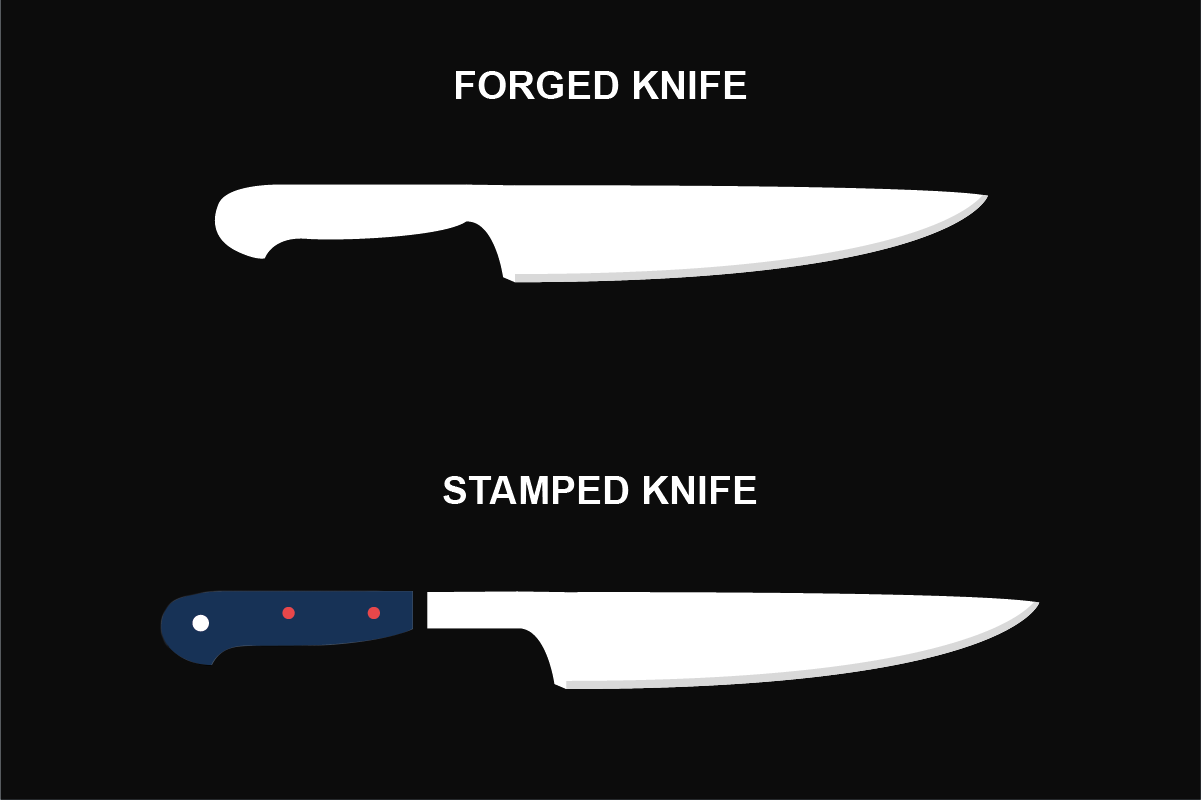
- Lightweight construction: With no thick bolster or full tang, stamped knives are much lighter than forged knives.
- Flexible blade: The absence of a bolster and thinner steel means more flex, useful for tasks requiring precision, such as filleting fish or slicing vegetables.
- No forged bolster: Most stamped knives lack the thick, protective bolster found on forged knives, making them easier to sharpen along the entire edge.
- Cost-effective: Mechanized production makes stamped knives more affordable.
Common Uses And Best Applications
While stamped knives have a reputation for being “entry-level,” many professional kitchens rely on them for high-volume tasks. Their lighter weight helps reduce fatigue, especially during repetitive prep work.
- Ideal for: Slicing, dicing, chopping vegetables, filleting fish, and boning poultry.
- Best for: Professional line cooks, home cooks seeking value and lightness, and anyone with grip or wrist strength concerns.
Example: Victorinox Fibrox Pro Chef’s Knife
The Victorinox Fibrox Pro is a prime example of a stamped knife earning professional respect. Its lightweight, razor-sharp blade and slip-resistant handle make it a favorite in commercial kitchens.
Pro Tip: If you spend hours prepping vegetables, a lighter stamped knife can reduce hand fatigue and speed up repetitive tasks.
Credit: imarku.net
What Is A Forged Knife? Process, Features, And Uses
Forged knives are often the pride of high-end cutlery, combining tradition with cutting-edge metallurgy. Their unique creation process yields exceptional durability and precise handling.
How Forged Knives Are Made
Forged knives are crafted from a single bar of steel, heated to extreme temperatures and pounded, either by hand or machine, into shape. The process is labor-intensive and requires significant expertise, especially for hand-forged blades.
- Key steps: Steel is heated → Shaped by hammering/pressing → Cooled and hardened → Edge ground and sharpened → Handle attached.
- Result: Stronger, denser blade with a thick bolster and full tang.
Distinctive Features Of Forged Knives
Forged knives offer several key attributes:
- Full tang construction: The steel runs the entire length of the handle, enhancing stability and balance.
- Bolster: The thick transition between the blade and handle adds weight, balance, and a protective finger guard.
- Heavier weight: The added metal makes forged knives heavier, providing a sense of control for precision tasks.
- Superior edge retention: Generally holds a sharper edge longer than stamped blades.
Common Uses And Best Applications
Forged knives excel at heavy-duty tasks requiring power and stability. The extra heft aids in chopping dense foods, splitting poultry, and achieving fine cuts.
- Ideal for: Chopping, mincing, slicing meat, breaking down poultry, and tasks requiring strength.
- Best for: Professional chefs, home cooks who prioritize durability, and anyone comfortable with a heavier knife.
Example: Wüsthof Classic Chef’s Knife
The Wüsthof Classic is widely regarded as an industry benchmark. Its forged, full-tang construction and precision edge have made it a staple in both restaurant and home kitchens.
Pro Tip: If you often cut through dense foods or value control in your knife work, a forged knife’s weight and balance provide a significant advantage.

Credit: prudentreviews.com
Stamped Vs Forged Knife: Head-to-head Comparison
To truly understand the practical differences between stamped and forged knives, it’s essential to compare their key attributes side by side. The following sections break down each aspect, supported by a detailed data table.
Durability And Longevity
Forged knives are generally more durable because the forging process aligns and strengthens the steel’s grain structure. They resist bending, chipping, and wear better over time. Stamped knives, though improved with modern steel technology, can be more prone to bending or developing nicks with heavy use.
- Forged: Superior resistance to impact and stress; can last decades with proper care.
- Stamped: Adequate durability for most kitchen tasks, but may need more frequent replacement if heavily abused.
Weight And Balance
Forged knives are heavier, which some cooks prefer for control and power. The bolster and full tang help balance the knife, making it feel stable in hand. Stamped knives are lighter, making them easier to maneuver and less tiring for prolonged use.
- Forged: Heavier, better balanced.
- Stamped: Lighter, often handle-heavy or blade-light.
Sharpness And Edge Retention
Forged knives tend to hold a sharp edge longer due to denser steel and precision heat treatment. Stamped knives can be razor-sharp out of the box but may require more frequent honing and sharpening.
- Forged: Better edge retention, easier to maintain a fine edge.
- Stamped: Easy to sharpen, but may dull faster.
Price And Value
Stamped knives are significantly less expensive, making them accessible to beginners and budget-conscious cooks. Forged knives carry a premium due to labor and materials.
- Forged: Higher initial cost, long-term value.
- Stamped: Affordable, but may need replacement sooner.
Comparison Table: Stamped Vs Forged Knife
| Attribute | Stamped Knife | Forged Knife |
|---|---|---|
| Manufacturing Process | Stamped from sheet steel | Forged from single bar of steel |
| Typical Weight | Light (5-7 oz for chef’s knife) | Heavy (7-10 oz for chef’s knife) |
| Blade Thickness | Thin and flexible | Thick and rigid |
| Edge Retention | Good, but dulls faster | Excellent, stays sharp longer |
| Price Range | $20, $100 | $80, $300+ |
| Maintenance | Easy to sharpen, requires frequent honing | More durable, but harder steel may require professional sharpening |
| Best For | Light prep, high-volume, budget | Heavy-duty, precision, longevity |
Credit: www.dinecompany.com
Real-world Performance: Case Studies And User Scenarios
Understanding the experiences of real users and culinary professionals illuminates how stamped and forged knives perform in practical settings.
Case Study 1: Professional Line Cook
A professional line cook in a high-volume restaurant typically preps hundreds of pounds of produce daily. Many opt for stamped knives like the Victorinox Fibrox Pro due to their lightness. The reduced fatigue means faster, more efficient prep, and the affordable price point allows for frequent replacement without financial strain.
- Key insight: For repetitive, all-day chopping, the lighter stamped knife wins in terms of comfort and speed.
Case Study 2: Butcher Shop Owner
Butchers often favor forged knives such as the Wüsthof Classic or Shun Classic. The added weight and balance make it easier to cut through tough meat and bone, while the robust edge resists chipping even with heavy use.
- Key insight: For tasks requiring power and control, forged knives provide superior performance and safety.
Case Study 3: Home Cook With Arthritis
A home cook with arthritis or reduced grip strength may find forged knives too heavy and difficult to control. In my experience testing both types, a lightweight stamped knife proved much easier to handle for all-day meal prep, reducing joint pain and improving enjoyment in the kitchen.
- Key insight: For cooks with physical limitations, the ergonomic advantages of stamped knives are significant.
Factors To Consider When Choosing Between Stamped And Forged Knives
Selecting the right knife type involves more than just comparing features, it’s about matching the tool to your unique needs and habits.
Cooking Style And Frequency
- Frequent, high-volume prep: Stamped knives are ideal for those who chop, slice, and dice in bulk.
- Occasional, precision tasks: Forged knives shine when you want control and longevity for special meals or dense ingredients.
Maintenance Willingness
- Low maintenance: Stamped knives are easy to sharpen at home and require less expertise.
- Long-term investment: Forged knives need periodic professional sharpening and careful maintenance but last longer.
Budget Constraints
- Entry-level or budget: Stamped knives deliver excellent performance for the price.
- Willing to invest: Forged knives offer superior longevity and can become heirlooms.
Hand Size And Strength
- Small hands or reduced strength: Lighter stamped knives are easier to maneuver.
- Strong grip, larger hands: The weight and balance of forged knives provide satisfaction and control.
Preferred Knife Brands
Some renowned brands specialize in one type:
- Stamped-focused: Victorinox, Mercer Culinary, Dexter-Russell.
- Forged-focused: Wüsthof, Zwilling J.A. Henckels, Shun.
Pro Tip: Try holding both types before buying. The right knife should feel like an extension of your hand.
Pros And Cons: Stamped And Forged Knives
No single knife is perfect for every user or every task. Understanding the distinct pros and cons will help you make a confident, informed choice.
Pros Of Stamped Knives
- Affordability: Lower price points make them accessible.
- Lightweight: Easier for long-term use and for those with less hand strength.
- Ease of sharpening: No bolster, so the entire edge is easy to maintain.
- Flexibility: Better for filleting, boning, and delicate slicing.
Cons Of Stamped Knives
- Less durable: More prone to bending and faster dulling.
- Lack of balance: Can feel blade- or handle-heavy, less control for some tasks.
- Perceived as lower quality: Though this is changing, some still see stamped knives as “cheap.”
Pros Of Forged Knives
- Superior strength: More resistant to damage and wear.
- Excellent balance: Full tang and bolster provide control and safety.
- Long-lasting edge: Requires less frequent sharpening.
- Prestige factor: Associated with craftsmanship and tradition.
Cons Of Forged Knives
- Higher cost: Premium materials and labor raise the price.
- Heavier: Can be tiring for long prep sessions or those with hand issues.
- Maintenance: Harder steel may require professional sharpening.
Pros & Cons Table
| Stamped Knives | Forged Knives | |
|---|---|---|
| Pros |
|
|
| Cons |
|
|
Myths And Misconceptions About Stamped And Forged Knives
There are several pervasive myths that can cloud a buyer’s judgment. Dispelling these misconceptions helps ensure an informed purchase.
Myth 1: All Forged Knives Are Better Than Stamped
While forged knives are renowned for their strength and balance, modern stamped knives can rival or exceed forged knives in terms of sharpness, edge geometry, and usability. Advances in metallurgy and production have leveled the playing field.
Myth 2: Stamped Knives Are Always Cheap And Flimsy
While stamped knives were once synonymous with low quality, this is no longer true. Brands like Victorinox and Global produce stamped knives used by professionals worldwide.
Myth 3: Only Chefs Need Forged Knives
While many chefs prefer forged knives for their durability and balance, plenty of professionals use stamped knives for specific tasks or personal comfort.
Myth 4: Stamped Knives Are Unsafe
A lack of bolster doesn’t inherently make a knife unsafe. Proper technique, grip, and regular maintenance are more important factors.
Example: The Global G-2 chef’s knife is a high-end stamped blade praised for its precision and performance, used by Michelin-star chefs.
For more on the science of knife manufacturing, see Wikipedia: Kitchen Knife.
Best Practices For Maintaining Stamped And Forged Knives
Regardless of which knife you choose, proper maintenance is essential for safety, performance, and longevity.
Cleaning And Storage
- Hand wash only: Always wash knives by hand with mild soap; avoid dishwashers, which can damage blades and handles.
- Dry immediately: Prevent rust by drying knives right after washing.
- Use a proper storage method: Knife blocks, magnetic strips, or blade guards protect edges and prevent accidents.
Honing And Sharpening
- Hone regularly: Use a honing steel to realign the edge after each use.
- Sharpen as needed: Stamped knives may require more frequent sharpening, but both types benefit from periodic professional sharpening for optimal performance.
Cutting Surfaces
- Use wooden or plastic boards: Hard surfaces like glass, stone, or ceramic can dull or chip blades.
Avoiding Damage
- Don’t pry or twist: Both stamped and forged knives can be damaged by improper use.
- Cut only food: Avoid using knives to cut packaging, bones (unless designed for it), or frozen foods.
Pro Tip: Even the best knife will dull quickly on a glass cutting board. Invest in a quality wooden or synthetic board to preserve your edge.
For an in-depth guide on knife care, see Cook’s Illustrated: Knife Care and Maintenance.
Frequently Asked Questions
What Is The Main Difference Between Stamped And Forged Knives?
The main difference is the manufacturing process: stamped knives are cut from a sheet of steel, while forged knives are shaped from a single bar of steel through heat and hammering. This results in differences in weight, balance, durability, and price.
Are Forged Knives Always Better Than Stamped Knives?
Not necessarily. While forged knives are stronger and often retain their edge longer, stamped knives can be just as sharp, are lighter, and often better suited for high-volume or delicate work. The “better” knife depends on your specific needs and preferences.
How Do I Tell If A Knife Is Forged Or Stamped?
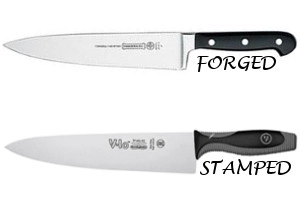
You can often identify a forged knife by its thick bolster (the area between the blade and handle) and full tang. Stamped knives usually lack a bolster, are lighter, and may have a thinner blade. Some brands will specify the type in their product descriptions.
Do Professional Chefs Use Stamped Knives?
Yes, many professional chefs use stamped knives for certain tasks, especially when a lighter, more flexible blade is desired. Some line cooks prefer stamped knives for all-day prep due to reduced fatigue.
Which Type Of Knife Is Easier To Sharpen At Home?
Stamped knives are generally easier to sharpen at home because they have softer steel and no bolster, allowing the entire edge to be sharpened easily. Forged knives may require professional sharpening, especially those made from harder steel alloys.
Choosing between a stamped and forged knife ultimately comes down to your cooking style, preferences, and budget. Each offers unique benefits: stamped knives are lightweight, affordable, and versatile, while forged knives deliver unmatched durability, balance, and edge retention. Test both types if you can, what matters most is how the knife feels and functions in your hand. A well-chosen knife, properly maintained, will elevate your culinary experience for years to come.
