
Every year, the debate around knives, specifically OTF knives and switchblades, ignites passionate discussions among enthusiasts, law enforcement, and lawmakers. If you’ve ever browsed knife forums or stood at a display case, you’ve likely encountered strong opinions and technical jargon that can make a simple question surprisingly complex: Is an OTF knife a switchblade? The answer isn’t just a matter of semantics; it affects legality, ownership rights, and practical use.
Understanding the difference between an OTF (Out-The-Front) knife and a switchblade is essential for anyone considering purchasing, carrying, or collecting these tools. Misunderstandings can lead to legal issues, confusion at airport security, or even confiscation of a prized possession. This comprehensive guide breaks down the mechanics, legal definitions, historical context, and real-world implications, giving you everything you need to know, whether you’re a collector, a first responder, or just curious about the blade in your pocket.
Key Takeaways
- OTF knives and switchblades overlap, but not all OTF knives are legally considered switchblades in every jurisdiction.
- The U.S. federal definition of a switchblade includes most OTF knives, but state laws can vary significantly.
- OTF knives use a unique deployment mechanism, differentiating them from side-opening switchblades.
- Legal considerations are complex, always verify local and state laws before carrying or purchasing.
- Real-world cases show how misunderstandings can lead to confiscation or criminal charges.
The Mechanics: Otf Knives Vs. Switchblades
Understanding how these knives function is the first step in distinguishing between an OTF knife and a switchblade. While both are automatic-opening knives, their mechanisms are distinct.
How Otf Knives Work
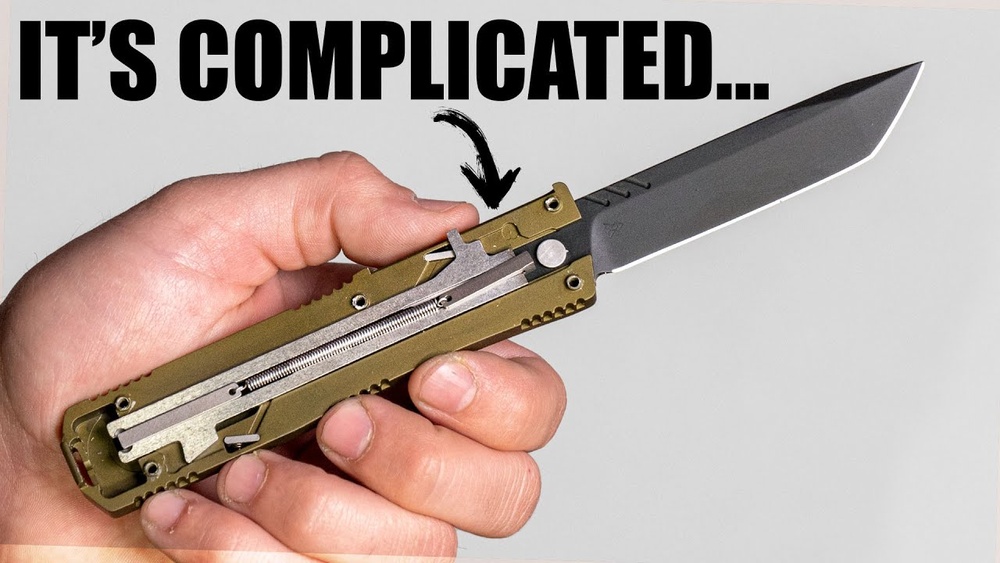
An OTF knife, or Out-The-Front knife, features a blade that deploys straight out of the handle’s front with the press of a button or slide. There are two main types:
- Single-action OTF: The blade deploys automatically, but must be manually retracted.
- Double-action OTF: Both deployment and retraction are automatic via the same control.
This design allows rapid, one-handed operation, making OTF knives popular among emergency personnel and collectors.
How Switchblades Work
A switchblade is any knife with a folding or sliding blade that opens automatically by spring action when a button, lever, or switch is activated. Most commonly, this refers to side-opening switchblades, where the blade swings out from the handle’s side, similar to a traditional folding knife but much faster.
Key Mechanical Differences
The core distinction lies in the direction of blade deployment:
- OTF knives: Blade shoots out the front.
- Switchblades (side-opening): Blade swings out the side.
However, the federal definition of a switchblade (see legal section) includes any knife that opens automatically, meaning most OTF knives are legally switchblades even if their mechanisms differ.
Comparison Table: Mechanical Features
| Feature | OTF Knife | Side-Opening Switchblade |
|---|---|---|
| Blade Deployment | Out the front | Out the side |
| Activation | Button or slide | Button or lever |
| Automatic Retraction | Double-action only | Rarely |
| Common Uses | Rescue, collection | Everyday carry, collection |
| Legal Status | Often restricted | Often restricted |
Example: Benchmade Infidel (otf) Vs. Pro-tech Godson (switchblade)
The Benchmade Infidel is a double-action OTF knife, prized for its quick deployment and solid lock-up. In contrast, the Pro-Tech Godson is a classic side-opening switchblade, popular for everyday carry. Both are automatic, but their mechanisms and user experiences are distinct.
Credit: www.youtube.com
Legal Definitions And Implications
The distinction between OTF knives and switchblades is often blurred by legal definitions, which vary by jurisdiction. Knowing the law is crucial for anyone considering ownership or carry.
Federal Definition In The United States
Under the Switchblade Knife Act of 1958, a switchblade is defined as:
> “Any knife having a blade which opens automatically by hand pressure applied to a button or other device in the handle of the knife. “
This broad definition encompasses both side-opening switchblades and OTF knives, if the blade opens automatically by a button or switch, it’s a switchblade by federal law.
State Laws And Variations
State and local laws can diverge sharply from federal definitions. Some states prohibit all switchblades, while others allow them with restrictions. For example:
- California: Allows switchblades with blades under 2 inches.
- Texas: Legalized switchblades and OTF knives in 2017.
- New York: Prohibits possession of switchblades, including OTF knives.
Pro Tip: Always check both state and local ordinances before carrying or purchasing.
Real-world Case Study: Airport Security Confiscation
In 2026, a traveler in Chicago had an OTF knife confiscated at TSA screening. The knife was legal to own in Illinois, but federal regulations prohibit automatic knives in carry-on luggage. The owner misunderstood the difference between state and federal law, resulting in the loss of the knife and a citation.
International Perspectives
OTF knives and switchblades are often heavily regulated worldwide. For example:
- Canada: Switchblades, including OTFs, are prohibited.
- United Kingdom: Both are illegal for civilian possession.
For detailed, country-by-country laws, consult official government resources or Wikipedia.

Credit: www.youtube.com
Historical Evolution Of Otf Knives And Switchblades
The history of automatic knives is rich and intertwined, influencing both the technology and the laws that govern them.
Origins Of The Switchblade
Switchblades first appeared in the mid-19th century. Early models, like the Sicilian stiletto, used a spring to automatically open the blade. By the early 20th century, American companies like Schrade and Camillus began mass-producing side-opening switchblades, which were marketed as handy tools for hunters and outdoorsmen.
Birth Of The Otf Knife
While early automatic knives were predominantly side-opening, the OTF design emerged in the early 1900s, with patents filed for out-the-front mechanisms. The Christy Cutter (1920s) is an early example, but true double-action OTF knives didn’t gain popularity until the late 20th century.
Pop Culture And Perception
Movies like *West Side Story* (1961) and *The Outsiders* (1983) helped cement the image of the switchblade as a symbol of rebellion. This notoriety contributed to restrictive laws in the 1950s and 1960s. OTF knives, less common in media, often fly under the radar but are increasingly recognized in law enforcement and rescue contexts.
Example: Military Adoption
During World War II, the U.S. military issued the M2 Paratrooper knife, a side-opening switchblade, to airborne troops. OTF knives have also seen limited military use, valued for their rapid deployment in confined spaces.

Credit: ravencresttactical.com
Practical Uses And User Experiences
Beyond legal definitions, the utility and appeal of OTF knives and switchblades are shaped by their practical applications.
Everyday Carry (edc)
For many, the attraction of an automatic knife lies in convenience:
- One-handed operation: Essential for individuals with limited mobility or those needing quick access.
- Speed: Deployment is near-instantaneous.
- Compactness: Modern designs are slim and pocket-friendly.
However, due to legal restrictions, automatic knives are often replaced by manual or assisted-opening alternatives in everyday carry scenarios.
Emergency And Rescue Applications
First responders, such as EMTs and firefighters, often carry OTF knives for:
- Cutting seatbelts or clothing in emergencies.
- Single-handed use in confined or hazardous conditions.
The double-action OTF is especially valued for its ability to both deploy and retract with one hand.
Collectors’ Market
Automatic knives, especially limited-edition OTFs, are highly sought after by collectors. Brands like Microtech, Benchmade, and Pro-Tech offer models that command premium prices. The complexity of the OTF mechanism adds to their allure and value.
Example: My Experience With A Microtech Ultratech
When I tested the Microtech Ultratech, I found the double-action mechanism both satisfying and reliable. The knife performed well in cutting tests and was easy to operate, but carrying it required careful attention to my local laws.
Table: Common Uses By Knife Type
| Use Case | OTF Knife | Side-Opening Switchblade | Manual Folder |
|---|---|---|---|
| Everyday Carry | Occasionally (where legal) | Occasionally (where legal) | Common |
| Rescue/First Responder | Common | Rare | Occasional |
| Collection | Very popular | Very popular | Popular |
| Self-Defense | Possible (legal constraints) | Possible (legal constraints) | Common |
The Modern Knife Market: Trends And Innovations
The knife industry continually adapts to legal, technological, and consumer demands. The popularity of OTF knives and switchblades has influenced design trends and market offerings.
Rise Of Assisted-opening And Manual Alternatives
Due to legal restrictions, many manufacturers have shifted focus to:
- Assisted-opening knives: Use a spring but require the blade to be started manually, skirting switchblade laws.
- Manual flippers: Depend entirely on user effort, with no spring assistance.
These knives offer fast deployment without falling under the switchblade definition, making them legal in more jurisdictions.
Innovations In Otf Technology
Recent years have seen improvements in OTF knife safety, reliability, and materials:
- Improved locking mechanisms: Reduce accidental deployment.
- Stronger springs and precision machining: Enhance durability.
- Exotic handle materials: Titanium, carbon fiber, and anodized aluminum.
Manufacturers like Microtech and Guardian Tactical lead the way in innovation.
Custom And High-end Market Growth
Collectors and enthusiasts drive demand for custom OTF knives, with some models fetching thousands of dollars. Limited runs, collaborations, and unique materials add to their appeal.
Example: The Microtech Halo VI, a single-action OTF, is prized for its craftsmanship and is often sold out within minutes of release.
Table: Knife Types By Legal Status And Popularity
| Knife Type | Legal in Most U.S. States | Collector Demand | Mainstream Popularity |
|---|---|---|---|
| OTF Knife | No | High | Moderate |
| Side-Opening Switchblade | No | High | Moderate |
| Assisted-Open | Yes | Moderate | High |
| Manual Flipper | Yes | Moderate | Very High |
Safety, Maintenance, And Responsible Use
Owning an automatic knife comes with specific responsibilities. Proper maintenance and safe handling are essential to prevent accidents and ensure longevity.
Safety Considerations
OTF knives, especially double-action models, can deploy with significant force. Safety tips include:
- Always keep the knife pointed away from your body when deploying.
- Engage safety locks if the model features one.
- Store the knife securely to prevent unauthorized access, especially by children.
Pro Tip: Practice deploying and retracting your OTF knife in a controlled environment before carrying it regularly.
Maintenance Best Practices
To keep an OTF knife functioning reliably:
- Clean the blade and mechanism regularly, OTF knives can accumulate debris inside the handle.
- Lubricate moving parts with a light, non-gumming oil.
- Inspect for wear or damage, replace springs or screws as needed.
- Follow manufacturer instructions for disassembly and cleaning.
Example: Microtech recommends periodic cleaning with compressed air to remove lint or grit that can impede action.
Responsible Ownership
- Respect local laws: Even if legal to own, some public spaces prohibit automatic knives.
- Use ethically: Automatic knives are tools, not weapons, except as a last resort for self-defense.
- Educate others: Inform family or co-workers about safe handling if they may encounter your knife.
Common Misconceptions And Myths
Despite their prevalence, many myths surround OTF knives and switchblades. Dispelling these misconceptions helps foster responsible and informed ownership.
Myth 1: All Otf Knives Are Illegal
Fact: While OTF knives are restricted in many places, they are legal in several U.S. states and countries under certain conditions. Always check specific regulations before assuming illegality.
Myth 2: Otf Knives Are Only For Self-defense
Fact: OTF knives are often used by rescue professionals, collectors, and hobbyists. Their utility extends far beyond self-defense scenarios.
Myth 3: Otf Knives Are Unreliable
Fact: Modern OTF knives from reputable manufacturers are engineered for durability and reliability. Early models may have been prone to mechanical failure, but advancements in design have largely addressed these issues.
Myth 4: Switchblade And Otf Are Interchangeable Terms
Fact: While most OTF knives are legally considered switchblades in the U.S., the terms refer to different mechanisms. Not all switchblades are OTF knives, and vice versa.
Example: Court Case Over Knife Definition
In a 2019 Texas case, a defendant argued that their OTF knife was not a switchblade under state law. The court referenced the federal definition, which includes any automatic-opening knife, demonstrating the complexity of legal interpretations.
How To Choose The Right Knife For Your Needs
Selecting between an OTF knife, switchblade, or manual folder depends on intended use, legal status, and personal preferences.
Consider Your Primary Use Case
- Rescue/emergency: OTF double-action for one-handed deployment and retraction.
- Everyday carry: Manual or assisted-opening, unless local laws permit automatics.
- Collection: Focus on craftsmanship, brand, and mechanism.
Research Local Laws Thoroughly
Before purchasing, verify:
- State and municipal laws
- Federal and transportation regulations
- Employer or school policies
Pro Tip: Some knife retailers, like BladeHQ, provide state-by-state legal guides.
Compare Key Features
- Blade length
- Deployment mechanism
- Handle material
- Safety features
- Price and warranty
Try Before You Buy
If possible, handle different models at a reputable dealer or knife show to assess ergonomics and action.
Example: When I attended a knife expo, testing both OTF and side-opening models helped clarify which felt more secure and practical for my hand size and intended use.
Frequently Asked Questions
What Is The Main Difference Between An Otf Knife And A Switchblade?
The main difference is the direction of blade deployment. An OTF knife deploys the blade straight out the handle’s front, while a switchblade typically refers to a side-opening automatic knife. Legally, most OTF knives are considered switchblades in the U.S., but the mechanisms and user experiences differ.
Are Otf Knives Legal To Carry Everywhere In The United States?
No, OTF knives are not legal everywhere. Laws vary by state and even municipality. Some states ban all automatic-opening knives, while others allow them with restrictions (e.g., blade length limits or permit requirements). Always consult local statutes before carrying an OTF knife.
Can Otf Knives Be Used For Self-defense?
OTF knives can be used for self-defense, but their legality for this purpose depends on jurisdiction. In some areas, carrying any automatic knife for self-defense is prohibited, and using one in a confrontation may carry legal risks. Consult a qualified attorney for guidance if you intend to carry for self-defense.
How Do I Maintain My Otf Knife To Ensure Longevity?
Regular maintenance includes cleaning the blade and internal mechanism, lubricating moving parts with a suitable oil, and inspecting for wear or damage. Avoid exposing your OTF knife to sand, grit, or excessive moisture. Always follow the manufacturer’s care instructions for best results.
What Should I Do If My Otf Knife Is Confiscated By Law Enforcement Or Tsa?
If your OTF knife is confiscated, remain calm and comply with authorities. You may be able to recover the knife if it was legal to possess but not to carry in that location, but this varies by agency and circumstance. Consult with a legal professional for advice on recovery or to dispute the action if you believe it was unjustified.
Whether you’re a collector, a first responder, or someone seeking a reliable tool, understanding the distinctions and legalities of OTF knives and switchblades is crucial. By staying informed and responsible, you can enjoy the unique advantages these knives offer while minimizing risks and legal issues.
