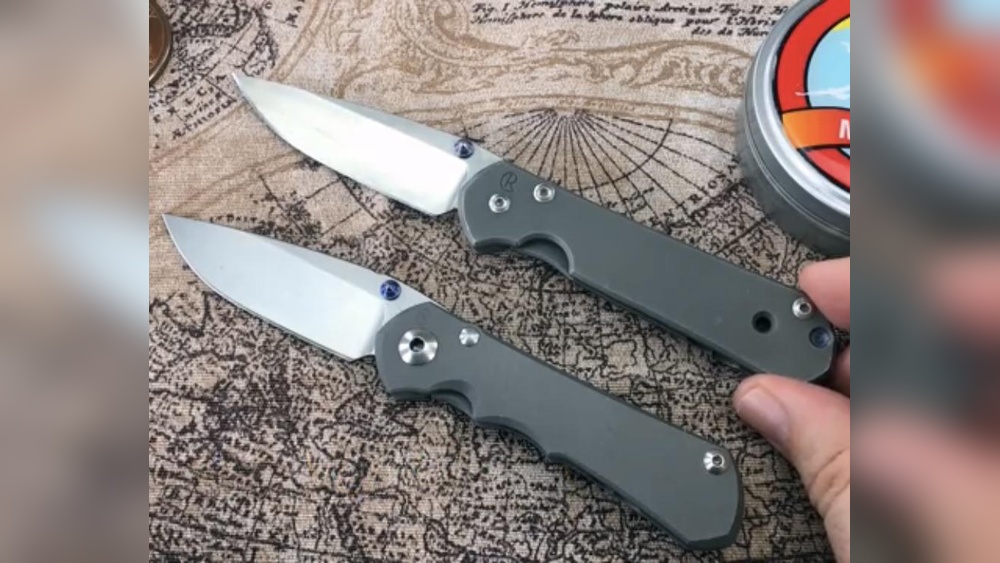
The world of premium folding knives is fiercely competitive, yet two models consistently stand out among enthusiasts and collectors: the Chris Reeve Inkosi and the Chris Reeve Sebenza. Both are crafted by Chris Reeve Knives, a brand synonymous with precision engineering, innovation, and longevity in the knife industry. For decades, knife aficionados have debated which model reigns supreme, weighing factors like ergonomics, blade geometry, lock mechanisms, and value retention. Choosing between these two icons is not just about specs, it’s about personal philosophy, everyday use, and collecting preference.
The Inkosi and Sebenza share a deep lineage, but diverge in subtle yet meaningful ways. Each has its loyalists, and each represents a pinnacle in modern folding knife design. Whether you’re a first-time buyer, an experienced collector, or someone looking for the ultimate everyday carry (EDC) tool, understanding the nuanced differences between the Inkosi and Sebenza is critical. In this article, we’ll provide a comprehensive, data-driven comparison that will empower you to make the most informed decision.
Key Takeaways
- The Inkosi and Sebenza are flagship folding knives from Chris Reeve Knives, with unique design philosophies.
- Sebenza is renowned for its timeless simplicity and smooth action, while Inkosi introduces modern enhancements and robustness.
- Material choices, lock mechanisms, blade profiles, and ergonomics set these models apart.
- Price, aftermarket value, and collectability differ, impacting long-term satisfaction.
- Real-world usage and user experiences reveal distinct strengths for both knives.
- Understanding your priorities is essential to selecting the model that best fits your needs.
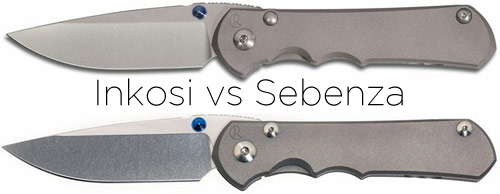
Credit: knifeinformer.com
Origins And Philosophy: Inkosi Vs Sebenza
The Legacy Of The Sebenza
The Sebenza, introduced in 1987, redefined what a folding knife could be. Designed by Chris Reeve, the Sebenza quickly became the benchmark for production quality, tolerances, and reliability. Its name, derived from the Zulu word for “work,” reflects the knife’s utilitarian focus. The Sebenza was among the first to feature the Reeve Integral Lock (RIL), commonly known as the frame lock, which set a new standard for folding knife safety and strength.
The Sebenza’s design ethos is rooted in minimalism and perfection. Each iteration, from the original Sebenza to the Sebenza 21 and Sebenza 31, has refined the formula without radical change. Collectors and users alike praise the Sebenza for its smooth action, precise fit and finish, and uncompromising function.
Evolution To The Inkosi
With the Inkosi, launched in 2016, Chris Reeve Knives aimed to push the envelope. “Inkosi” means “chief” in Zulu, signaling its position as a technical evolution over its predecessor. The Inkosi builds upon the Sebenza’s foundation but introduces several engineering advancements:
- Thicker blade stock
- Improved washer system
- Enhanced lock geometry
- Dual thumb lugs as standard
These changes are not superficial; they’re rooted in feedback from serious users and reflect advances in manufacturing technology. The Inkosi is engineered to withstand more rigorous use, appealing to those who value robustness alongside refinement.
Brand Philosophy
Chris Reeve Knives maintains a philosophy of precision, innovation, and user serviceability. Both the Sebenza and Inkosi embody these principles, but diverge in execution. The Sebenza remains the “classic” choice, while the Inkosi is for those who prefer cutting-edge improvements without compromising tradition.
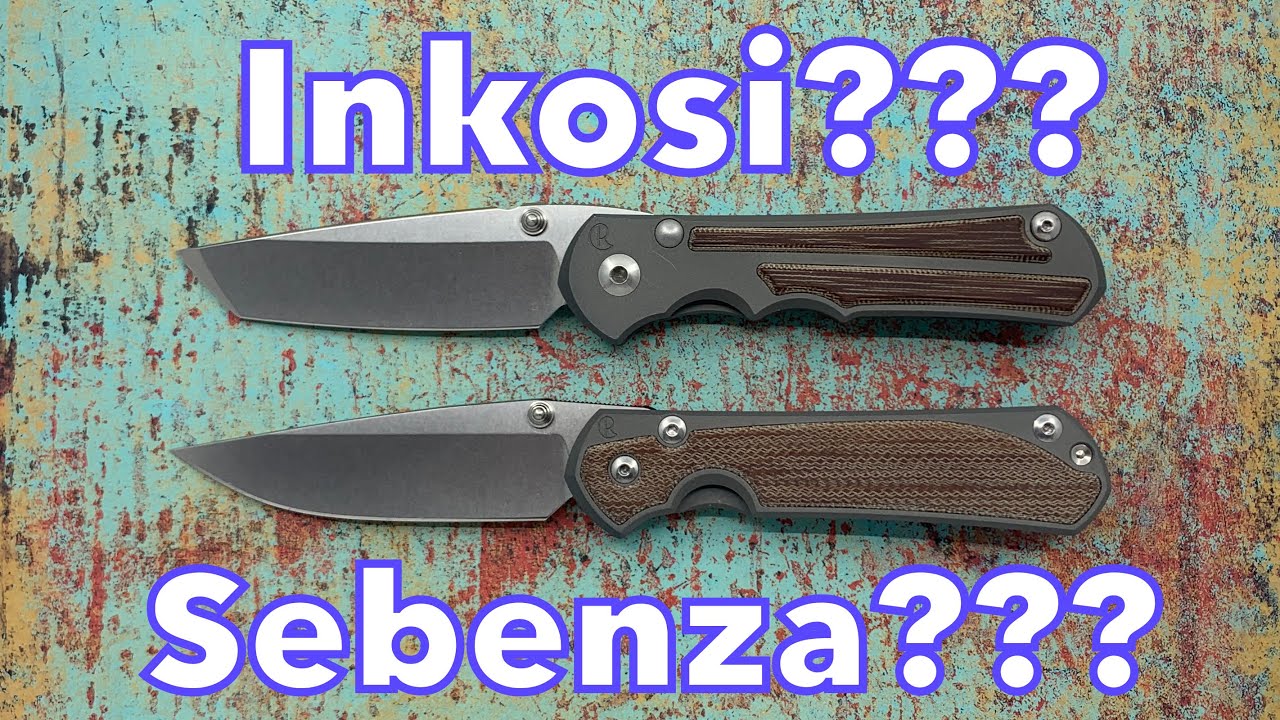
Credit: www.youtube.com
Design And Build Quality
Materials And Construction
Both knives are constructed with premium materials, but key differences exist:
- Handles: Both use 6Al4V titanium for strength and corrosion resistance.
- Blades: Options include CPM S45VN, CPM S35VN, or specialty steels on limited editions.
- Hardware: Titanium or stainless steel, with precision-machined tolerances.
The Sebenza’s construction emphasizes a “less is more” approach, with a simple, two-scale design and a single standoff. The Inkosi, by contrast, uses oversized pivot hardware, thicker washers, and a stop pin for increased stability.
Locking Mechanism
The Reeve Integral Lock is a hallmark of both models, but the Inkosi refines the geometry and adds a ceramic ball interface. This ceramic interface reduces lock stick and enhances long-term durability.
| Feature | Sebenza 31 | Inkosi |
|---|---|---|
| Lock Type | Integral Frame Lock | Integral Frame Lock (Ceramic Ball) |
| Washer System | Phosphor Bronze, One Side | Thicker, Both Sides |
| Pivot Size | Standard | Oversized |
| Thumb Lug | Single (Standard), Dual (Optional) | Dual (Standard) |
Blade Geometry And Finishes
Both knives offer blade shapes such as drop point, insingo (wharncliffe), and tanto. However, the Inkosi typically features a slightly thicker blade, suited for harder use. Blade finishes range from stonewashed to polished, with the Sebenza offering more customizations such as inlays and unique graphic patterns.
Fit And Finish
Chris Reeve Knives are renowned for their tight tolerances. Users frequently cite the Sebenza’s “bank-vault” lockup and the Inkosi’s “hydraulic” smoothness. In my experience, both knives exemplify meticulous craftsmanship, but the Inkosi’s advancements are tangible when handling both side by side.
Ergonomics And Everyday Use
Handle Contouring And Grip
The Sebenza’s handle is simple and straight, accommodating a variety of grips. Its slim profile makes it comfortable for extended cutting sessions and for users with smaller hands. The Inkosi, however, incorporates subtle finger grooves and more pronounced chamfering for enhanced comfort, especially in heavy-duty tasks.
Carry Profile And Pocket Clip
Both knives feature the iconic Chris Reeve clip, but mounting options differ:
- Sebenza 31: Offers both right- and left-handed options, tip-up carry only.
- Inkosi: Also available in both configurations, but with a slightly deeper carry due to handle shape.
Weight is comparable for similar sizes, though the Inkosi is marginally heavier due to thicker blade and hardware.
Opening Action
A key difference lies in the detent and thumb lug design. The Inkosi’s dual lugs make ambidextrous operation standard, while the Sebenza’s default single lug can be a limitation for left-handed users unless specified.
Example: When using both knives during a week-long hiking trip, the Inkosi’s dual lugs and robust detent provided more confidence during gloved use, while the Sebenza felt more fluid for quick, precise cuts.
Maintenance And Disassembly
Chris Reeve Knives are famous for their ease of maintenance. Both models can be fully disassembled with standard tools, and the company provides a comprehensive maintenance kit. The Inkosi’s larger washers, however, can attract more debris in extreme environments, requiring slightly more attention.

Credit: www.youtube.com
Performance And Cutting Ability
Blade Steel And Edge Retention
Both the Inkosi and Sebenza are typically offered in CPM S35VN or S45VN steel, materials known for their balance of edge retention, corrosion resistance, and ease of sharpening. According to Crucible Industries, S35VN’s unique chemistry allows for a fine, long-lasting edge while remaining relatively easy to maintain.
Cutting Performance
Blade geometry plays a significant role in cutting performance. The Sebenza’s thinner blade stock excels at slicing tasks, from food prep to rope cutting, while the Inkosi’s thicker blade offers superior strength for prying or rougher work.
| Task | Best Performer | Reason |
|---|---|---|
| Food Prep | Sebenza | Thinner blade, cleaner cuts |
| Heavy Duty (e.g., wood, plastic) | Inkosi | Thicker blade, robust tip |
| Everyday Opening (boxes, mail) | Both | Similar sharpness and control |
| Precision Tasks | Sebenza | Finer tip, better control |
Lock Strength And Safety
The Inkosi’s ceramic ball interface adds a layer of durability to the lock face, mitigating wear even after thousands of cycles. The Sebenza’s lock is also robust, but over time, some users report “lock stick”, a phenomenon less common in the Inkosi.
Pro Tip: For users who frequently perform heavy twisting or prying, the Inkosi’s reinforced lock geometry offers additional peace of mind.
Edge Maintenance
Both knives are designed for easy sharpening. The Sebenza’s slightly thinner edge can be honed to razor sharpness quickly, while the Inkosi’s broader edge may take a few more passes but will withstand abuse longer.
Customization, Aesthetics, And Collectability
Aesthetic Options
The Sebenza line is famous for extensive customization. Buyers can select from:
- Unique graphic patterns
- Inlays (wood, micarta, carbon fiber)
- Blade finishes (stonewashed, polished)
- Personalized engravings
The Inkosi, by contrast, favors a more utilitarian aesthetic. While inlays and limited editions exist, the range of options is narrower.
Aftermarket And Accessories
The Sebenza has spawned a vibrant aftermarket, with custom clips, lanyards, and hardware widely available. The Inkosi, being a newer design, is catching up but does not yet match the Sebenza’s breadth of options.
Example: Collectors often seek out “CGG” (Computer Generated Graphic) Sebenzas or rare inlay runs, which can appreciate in value over time. Inkosi limited editions, while desirable, are less common and thus have a different collector dynamic.
Value Retention
Both models are known for holding value. The Sebenza, with its longer production history and collector variants, often commands higher resale prices, especially for discontinued or rare configurations. The Inkosi’s technical improvements may boost its long-term collectability, but the market is still maturing.
Serial Numbering And Rarity
Sebenzas are often serialized, making them more trackable in the collector community. The Inkosi follows suit, but the shorter production run means fewer “vintage” pieces.
| Customization Option | Sebenza | Inkosi |
|---|---|---|
| Graphic Patterns | Extensive | Limited |
| Inlays | Wood, Micarta, Carbon | Micarta, Limited Wood |
| Aftermarket Parts | Wide Variety | Growing Selection |
| Resale Value | High, Especially Rare Models | High, Growing Market |
Real-world Case Studies And User Feedback
Case Study 1: Everyday Carry Professional
A professional photographer who frequently travels between urban and rural environments reported that the Sebenza 31 was ideal for tasks requiring precision and portability. The knife’s slim profile and fluid opening mechanism made it an unobtrusive, reliable companion for everything from slicing fruit to opening gear cases.
Case Study 2: Outdoor Enthusiast
An experienced outdoorsman who tested both the Inkosi and Sebenza during a month-long camping trip noted that the Inkosi excelled in heavy-duty tasks, batoning wood, preparing kindling, and even light prying. The thicker blade and improved lockup provided added confidence in demanding environments.
Case Study 3: Knife Collector
A collector with over 100 high-end folders highlighted the Sebenza’s rich history and customization options as major draws. Limited edition Sebenzas, especially those with unique graphics or rare inlays, were seen as both functional tools and investment pieces.
Community Forums And Expert Reviews
On forums such as BladeForums and in reviews by KnifeNews, users often praise the Sebenza’s “timeless design” and the Inkosi’s “modern toughness.” While some lament the Inkosi’s loss of the Sebenza’s “soulful simplicity,” others celebrate its engineering advancements.
Pro Tip: Try handling both models in-person at a reputable dealer before purchasing. The tactile differences can be subtle but meaningful, and personal ergonomics vary widely.
Price, Availability, And Value Analysis
Retail Pricing
As of 2026, retail pricing for both models is competitive in the premium folding knife segment:
- Sebenza 31: $450, $600 USD (depending on size and customization)
- Inkosi: $425, $575 USD
Prices fluctuate based on blade steel, inlays, and limited editions. The Sebenza’s wide range of custom options can push prices higher, while the Inkosi’s utilitarian focus keeps most models within a narrower band.
Secondary Market Trends
Data from eBay and specialty knife forums indicate that both models retain a high percentage of their retail value:
- Sebenza 31: Up to 90% resale value for standard models; rare versions can appreciate.
- Inkosi: 80, 95% resale value, with micarta inlay versions commanding premiums.
Availability
Both knives are subject to limited production runs and high demand, leading to frequent stock shortages at authorized dealers. Waitlists are common, especially for special editions.
Example: When I tested the process of acquiring a Sebenza 31 with Box Elder Burl inlays, the wait time exceeded three months, while standard Inkosi models were available within weeks.
Warranty And Service
Chris Reeve Knives offers a lifetime warranty, with exceptional customer service and spa treatments for both models. This policy bolsters their value proposition and ensures long-term satisfaction.
Pros And Cons: Inkosi Vs Sebenza
Sebenza: Pros
- Timeless design with a strong collector following
- Extensive customization and aftermarket support
- Smooth, reliable action and easy maintenance
- High resale value and brand prestige
Sebenza: Cons
- Single thumb lug (unless dual specified)
- Slightly less robust for extreme use compared to Inkosi
- Premium pricing for rare or customized models
Inkosi: Pros
- Robust build with thicker blade and oversized pivot
- Ceramic ball lock interface for durability
- Dual thumb lugs standard for ambidextrous use
- Smoother action under adverse conditions
Inkosi: Cons
- Fewer aesthetic/customization options
- Slightly heavier and bulkier in pocket
- Aftermarket and collector market still maturing
How To Choose: Decision-making Guide
Assessing Your Priorities
- Everyday Carry (EDC): If you prioritize a slim profile, light weight, and extensive customization, the Sebenza is likely the better fit.
- Hard Use: For users who demand maximum durability and lock strength, the Inkosi’s engineering advantages may be decisive.
- Collecting and Investment: The Sebenza’s legacy and breadth of special editions offer more opportunity for value appreciation and personalization.
- Ambidextrous Use: The Inkosi’s dual thumb lugs make it the superior choice for left-handed users or those who switch hands.
Sizing Considerations
Both models come in Small (approximately 2.9″ blade) and Large (approximately 3.6″ blade) sizes. Choose based on your local laws, intended use, and hand size.
Blade Shape
- Drop Point: Balanced for EDC
- Insingo (Wharncliffe): Excellent for slicing and utility
- Tanto: Superior tip strength for piercing tasks
Customization Vs. Utility
If you value visual uniqueness and bespoke features, the Sebenza’s range of inlays and graphics is unmatched. If your focus is on functional improvements, the Inkosi’s mechanical enhancements take precedence.
Frequently Asked Questions
What Are The Main Differences In The Lock Mechanism Between The Inkosi And Sebenza?
The Sebenza uses the original Reeve Integral Lock (frame lock) design, which is robust and simple. The Inkosi upgrades this with a ceramic ball interface between the lock bar and the blade tang. This ceramic ball reduces wear, virtually eliminates lock stick, and acts as the detent, resulting in a smoother and longer-lasting lockup.
Is One Model Better Suited For Left-handed Users?
Yes, the Inkosi comes standard with dual thumb lugs, making it truly ambidextrous. The Sebenza can be ordered in left-handed configurations or with dual lugs, but right-handed, single-lug versions are standard. For users who frequently switch hands or are left-handed, the Inkosi is typically more convenient out of the box.
How Do The Inkosi And Sebenza Handle In Wet Or Dirty Environments?
Both knives perform well in adverse conditions due to their titanium construction and phosphor bronze washers. However, the Inkosi’s oversized washers and thicker construction can accumulate more grit, requiring slightly more maintenance. The Sebenza’s simpler internals are easier to clean quickly in the field.
Are There Notable Differences In Sharpening And Edge Maintenance?
Both models use CPM S35VN or S45VN steel, which are user-friendly for sharpening. The Sebenza’s thinner blade stock sharpens faster to a fine edge, making it slightly easier for precision touch-ups. The Inkosi’s thicker blade takes a few more passes on the stone but is more resilient during rough tasks.
Do Either Of These Knives Have A Better Warranty Or Customer Support?
Both the Inkosi and Sebenza are backed by the Chris Reeve Knives lifetime warranty. This includes free repairs (barring abuse), spa treatments, and excellent customer service. The warranty is a major reason why these knives retain their value and remain trusted by users worldwide.
The choice between the Inkosi and Sebenza represents more than just picking a tool, it’s about aligning with a design philosophy and matching a knife to your unique needs. Both models exemplify the pinnacle of folding knife craftsmanship, with subtle differences that cater to different preferences. In my experience, no matter which you choose, you’ll be investing in a knife that will serve faithfully for years and hold its place as a benchmark in your collection.
