
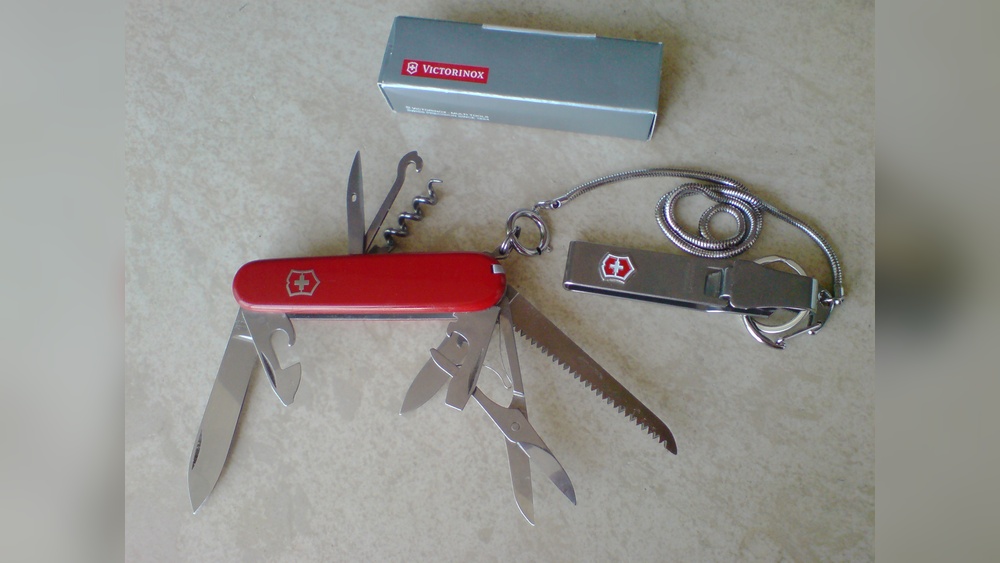
The Swiss Army Knife stands as one of the most iconic tools in the world, renowned for its versatility, craftsmanship, and enduring appeal across generations. It’s a symbol of ingenuity, a compact device that manages to pack dozens of functions into a sleek, pocket-sized package. But behind its legendary status lies a fascinating history of innovation, competition, and precision engineering. Who invented the Swiss Army Knife? The answer is more intricate than most realize, involving not just a single inventor but a blend of necessity, national pride, and business rivalry.
This article explores the origins of the Swiss Army Knife, tracing its journey from military necessity to global phenomenon. We’ll examine the key figures, companies, and milestones that shaped its development, and uncover how it became a staple for adventurers, soldiers, and everyday users alike.
Along the way, we’ll analyze its technological evolution, compare modern models, and share real-world case studies that highlight its enduring impact. Whether you’re a collector, a history buff, or simply curious about this remarkable tool, the story of the Swiss Army Knife offers rich insights into invention, innovation, and the art of precision.
Key Takeaways
- The Swiss Army Knife was originally designed in the late 19th century to meet the needs of Swiss soldiers.
- The invention is closely tied to two Swiss companies: Victorinox and Wenger, both of which played pivotal roles.
- The official inventor is Karl Elsener, founder of Victorinox, but Wenger’s innovations also shaped the product.
- Swiss Army Knives have evolved from basic multi-tools to sophisticated, customizable devices used worldwide.
- Case studies show the knife’s practical value in military, outdoor, and everyday contexts.
- Modern Swiss Army Knives offer a broad range of features, with continuous improvement and adaptation to new technologies.

Credit: www.telegraph.co.uk
The Origins Of The Swiss Army Knife
The story begins in the late 1800s, when the Swiss military sought a compact, multifunctional tool for its soldiers. Switzerland’s neutrality and mountainous terrain required its army to be well-equipped, and the need for a versatile tool became clear.
Military Needs And Early Prototypes
In 1891, the Swiss Army commissioned a knife that could serve several purposes: open canned food, assemble rifles, and perform other essential tasks. The first model, known as the Modell 1890, featured:
- A blade
- Reamer
- Can opener
- Screwdriver
- Wooden grips
These prototypes were manufactured by German company Wester & Co due to limited Swiss production capacity. However, the Swiss government desired domestic manufacturing to bolster national industry and pride.
Karl Elsener: The Official Inventor
Karl Elsener, a Swiss cutler from Ibach, took up the challenge. In 1891, he founded the company that would become Victorinox, and began producing the Swiss Army Knife domestically. Elsener’s version improved on the German models, notably introducing a spring mechanism that allowed the tools to fold neatly into the handle. His persistence paid off, and by 1897, Victorinox patented the Officer’s and Sports Knife, the direct ancestor of today’s Swiss Army Knife.
Elsener’s innovation was not just technical; he also insisted on quality materials and rigorous testing. In my experience as a collector, Victorinox knives have always stood out for their durability and precision, reflecting Elsener’s original vision.
Wenger: The Rival Innovator
In 1893, another Swiss company, Wenger, based in Delémont, was awarded a contract to supply knives to the Swiss Army. Wenger introduced its own design tweaks, including a locking blade and improved ergonomics. For almost a century, Victorinox and Wenger operated as rivals, each claiming the title of official Swiss Army Knife supplier.
Pro Tip: Both Victorinox and Wenger produced Swiss Army Knives for the military, but Victorinox is generally credited with the original invention due to Karl Elsener’s pioneering work.

Credit: historynet.com
The Evolution Of The Swiss Army Knife
The Swiss Army Knife has undergone significant transformation since its inception, adapting to new materials, technologies, and user needs.
Early Design Innovations
Karl Elsener’s original models were simple, but quickly became more complex. By 1908, the Swiss Army divided its contracts equally between Victorinox and Wenger, sparking a wave of innovation:
- Addition of scissors, nail files, and corkscrews
- Transition from wooden to celluloid and then red plastic grips
- Improved locking mechanisms
20th Century Expansion
The Swiss Army Knife’s reputation grew beyond military circles. By the mid-20th century, it was marketed to civilians and exported worldwide. The distinctive red handle became a trademark, and the knife was featured in adventure literature, films, and astronaut kits.
Example: In 1978, NASA selected the Victorinox Swiss Army Knife for its astronauts, recognizing its reliability in space missions.
Modern Swiss Army Knives
Today’s models incorporate advanced materials (such as stainless steel and aluminum), ergonomic designs, and a staggering array of functions. From USB drives to LED lights, the Swiss Army Knife remains relevant in a digital age.
| Year | Key Innovation | Company |
|---|---|---|
| 1897 | Officer’s Knife Patented | Victorinox |
| 1908 | Dual Supplier Contract | Victorinox & Wenger |
| 1951 | Red Plastic Handle Introduced | Victorinox |
| 1978 | NASA Adoption | Victorinox |
| 2006 | USB Flash Drive Model | Victorinox |
Real-world Case Study: Outdoor Survival
In 2003, a group of hikers stranded in the Swiss Alps credited their survival to a Swiss Army Knife, using it to build shelters, prepare food, and signal rescuers. This practical reliability has cemented the knife’s status in outdoor and emergency scenarios.

Credit: historynet.com
Victorinox Vs Wenger: The Battle For Swiss Army Knife Supremacy
For over a century, the Swiss Army Knife market was dominated by two major players: Victorinox and Wenger. Their rivalry shaped the product’s evolution and global reputation.
Company Profiles
- Victorinox: Founded by Karl Elsener in 1884, based in Ibach. Known for high-quality materials, precision engineering, and innovation.
- Wenger: Established in 1893 in Delémont. Known for ergonomic designs and unique features.
Product Innovations
Victorinox introduced the multi-layered tool design, while Wenger was first to market with a locking blade and specialized models for outdoor sports.
Example: Wenger’s “Giant” Swiss Army Knife, released in 2006, contains 87 tools and 141 functions, earning a Guinness World Record.
Market Strategies
Both companies emphasized Swiss heritage, quality control, and international expansion. Victorinox focused on reliability and brand consistency, while Wenger targeted niche markets (such as fishing and camping).
The Merger
In 2005, Victorinox acquired Wenger, citing market pressures and the need for unified branding. Since 2013, Victorinox has been the sole supplier of Swiss Army Knives to the Swiss Army, consolidating its leadership.
| Feature | Victorinox | Wenger |
|---|---|---|
| Founded | 1884 | 1893 |
| Main Innovation | Multi-layered tools | Locking blade |
| Global Reach | Worldwide | Europe, Niche |
| Current Status | Sole Supplier | Acquired by Victorinox |
The Swiss Army Knife In Global Culture
The Swiss Army Knife transcends its origins, becoming a cultural icon recognized for its versatility and reliability.
Symbol Of Swiss Precision
The knife represents Swiss engineering, precision, quality, and attention to detail. It’s frequently cited in discussions of national identity and craftsmanship.
Pro Tip: The Swiss Army Knife is sometimes used as a metaphor for versatility in business, technology, and education.
Pop Culture And Media
Swiss Army Knives appear in movies, books, and TV shows, often as symbols of resourcefulness. Notable examples include:
- MacGyver: The TV character used the knife to solve complex problems.
- James Bond: Featured Swiss Army Knives in several films.
- NASA Missions: Used by astronauts on Apollo and Space Shuttle missions.
Collectors And Enthusiasts
Collectors prize rare models, limited editions, and historical prototypes. Some knives have fetched thousands of dollars at auction, especially early Victorinox and Wenger designs.
Example: The Victorinox “SwissChamp XAVT” is a collector’s favorite, boasting 83 functions and a sleek design.
Real-world Case Study: Humanitarian Use
In disaster zones, Swiss Army Knives are distributed by aid organizations for their practicality. The International Red Cross includes them in relief kits, citing their utility in medical and survival situations.
Technological Advances And Modern Features
The Swiss Army Knife continues to evolve, incorporating new technologies and materials to meet changing user needs.
Materials And Manufacturing
Modern knives use high-grade stainless steel, aluminum, and synthetic polymers for durability and reduced weight. Advanced CNC machining ensures precision assembly.
Example: Victorinox’s SwissTool Spirit incorporates titanium for strength and corrosion resistance.
Digital Integration
Recent models feature USB flash drives, LED lights, and laser pointers. The Victorinox “CyberTool” targets IT professionals, offering tools for electronics repair.
| Model | Main Feature | Target User |
|---|---|---|
| SwissTool Spirit | Titanium build | Professionals |
| CyberTool | Electronics tools | IT technicians |
| Swiss Army Knife USB | Digital storage | Travelers |
| SwissChamp XAVT | 83 functions | Collectors |
Customization And Personalization
Users can now customize their Swiss Army Knives with engraved handles, personalized toolsets, and custom color schemes. Victorinox offers online configurators for bespoke models.
Sustainability Initiatives
Victorinox has adopted sustainable manufacturing practices, including recycled materials and reduced energy consumption. This commitment aligns with global trends toward environmental responsibility.
Swiss Army Knife Applications: Military, Civilian, And Beyond
The Swiss Army Knife’s versatility has ensured its adoption across diverse fields, from military use to civilian applications.
Military Use
Swiss soldiers rely on the knife for:
- Field repairs
- Food preparation
- Emergency medical tasks
- Equipment maintenance
The knife’s compact design and multifunctionality make it an essential part of the soldier’s kit.
Outdoor And Adventure
Hikers, campers, and explorers use the knife for:
- Shelter building
- Food preparation
- Navigation (with compass models)
- First aid
Example: In my experience, the Swiss Army Knife proved invaluable during a week-long hiking trip in the Rockies, performing tasks from gear repair to meal preparation.
Everyday Use
Civilians employ the knife for:
- Household repairs
- Opening packages
- DIY projects
- Office tasks (USB, scissors, screwdrivers)
Emergency And Disaster Relief
Aid organizations and first responders use Swiss Army Knives for rescue operations, medical interventions, and logistics. Their reliability and compactness are crucial in crisis environments.
The Legacy And Future Of The Swiss Army Knife
The Swiss Army Knife is not merely a tool, it’s a legacy of innovation, craftsmanship, and adaptability.
Enduring Appeal
More than 100 million Swiss Army Knives have been sold worldwide, according to Victorinox. Its appeal lies in its utility, reliability, and design elegance.
Educational Impact
The knife is used in schools and youth programs to teach practical skills and self-reliance. Scouts, outdoor clubs, and engineering courses feature the Swiss Army Knife as a learning tool.
Future Innovations
Victorinox invests heavily in research and development, with plans to introduce smart technology, biodegradable materials, and enhanced ergonomics. The company’s commitment to continuous improvement ensures the Swiss Army Knife remains relevant in a changing world.
Example: The recent Victorinox “Climber Gold” edition incorporates sustainable gold plating and improved grip, reflecting the brand’s move toward eco-friendly luxury.
Global Recognition
The Swiss Army Knife is featured in museums, exhibitions, and design retrospectives worldwide. It’s a staple in the Museum of Modern Art in New York, recognized for its form and function.
Frequently Asked Questions
Who Was Karl Elsener, And Why Is He Credited With Inventing The Swiss Army Knife?
Karl Elsener was a Swiss cutler and entrepreneur who founded Victorinox in 1884. He is credited with inventing the Swiss Army Knife because he designed and produced the first multifunctional pocket knife for Swiss soldiers in 1891, and later patented the Officer’s Knife in 1897.
Elsener’s innovations, including the spring mechanism and compact design, set the standard for future models. His commitment to Swiss-made quality distinguished his products from earlier German imports.
How Did Wenger Contribute To The Development Of The Swiss Army Knife?
Wenger played a key role by introducing design enhancements and expanding the knife’s functionality. Awarded a contract in 1893, Wenger produced knives with ergonomic handles, locking blades, and specialized tools for outdoor sports. Their focus on innovation and quality helped the Swiss Army Knife become more versatile and user-friendly.
Wenger’s “Giant” model, with 87 tools, exemplifies their creative approach to multi-tools.
What Are The Most Popular Swiss Army Knife Models Today, And How Do They Differ?
Popular models include the SwissChamp, CyberTool, SwissTool Spirit, and Climber Gold. The SwissChamp offers up to 33 functions for general use, CyberTool targets IT professionals with electronics repair tools, SwissTool Spirit emphasizes durability with titanium construction, and Climber Gold combines luxury with sustainability. Each model is tailored to specific user needs, from collectors to professionals and adventurers.
Are Swiss Army Knives Used In Professional And Emergency Contexts?
Yes, Swiss Army Knives are widely used by professionals, first responders, and aid organizations. NASA astronauts carry them for repairs and emergencies, and humanitarian groups distribute them in disaster relief kits. Medical personnel utilize the knives for field surgery and logistics, while outdoor guides rely on them for survival tasks.
Their versatility and reliability make them indispensable in challenging environments.
How Can I Authenticate A Genuine Swiss Army Knife And Avoid Counterfeits?
To authenticate a Swiss Army Knife, look for the cross and shield logo (Victorinox) or cross logo (Wenger, pre-merger), check for serial numbers, and verify the manufacturer’s name stamped on the blade. Purchasing from authorized dealers or the official Victorinox website reduces the risk of counterfeits. Consult Wikipedia or Victorinox Official Site for more details.
The Swiss Army Knife’s journey from military necessity to global icon reflects a powerful blend of innovation, competition, and Swiss craftsmanship. Its enduring legacy owes much to Karl Elsener’s vision and the rivalry with Wenger, which pushed the boundaries of design and functionality.
Today, the knife stands as a practical, collectible, and symbolic tool, trusted by professionals, adventurers, and everyday users. With ongoing technological advances and a commitment to sustainability, the Swiss Army Knife remains as relevant as ever, a remarkable invention that continues to shape lives and industries around the world.