The battle between the taping knife and the joint knife is a common crossroads for both novice and professional drywall finishers. These tools, essential for achieving flawless drywall surfaces, often spark debate about their differences, optimal uses, and impact on workflow. Choosing the right knife can make the difference between a smooth, seamless wall and a patchy, uneven finish. Yet, confusion persists due to overlapping terminology and varied manufacturing standards.
Drywall finishing is both an art and a science, requiring precision, patience, and the right tool for each step. While both taping and joint knives are used for applying and smoothing joint compound, their design, size, and intended purpose set them apart.
Understanding these distinctions is crucial for anyone aiming to master drywall installation, from ambitious DIYers to seasoned contractors. This article explores their features, functions, and pros and cons, helping you select the best tool for your next project.
Key Takeaways
- Taping knives are wider, ideal for covering large areas and feathering compound.
- Joint knives are narrower, suited for tight spaces and detailed work.
- Each tool serves distinct stages of drywall finishing, affecting the final surface quality.
- Choosing the right knife increases efficiency and improves results.
- Material, size, and handle design significantly impact user comfort and performance.
- Real-world examples illustrate how tool selection can affect project outcomes.

Credit: www.youtube.com
Understanding Taping Knife And Joint Knife
A foundational grasp of the taping knife and joint knife helps clarify their unique roles in drywall finishing. Although both are considered drywall knives, their differences are more than cosmetic; they influence application technique, finish quality, and user fatigue.
What Is A Taping Knife?
The taping knife is recognized by its broad, rectangular blade, ranging from 6 to 14 inches wide. Designed to spread joint compound over seams, it excels in covering large surfaces quickly and efficiently. The wide blade allows for feathering, an essential technique for blending compound into existing drywall, thus minimizing visible transitions.
Key features:
- Blade width: 6, 14 inches
- Blade material: Stainless steel or blue steel for flexibility
- Handle: Often ergonomic, sometimes with soft grips
Taping knives are indispensable for embedding drywall tape, applying skim coats, and finishing wide joints. Their flexibility lets users achieve smooth, consistent surfaces.
What Is A Joint Knife?
The joint knife (sometimes called a putty knife or drywall knife) is narrower, typically ranging from 3 to 6 inches. Its compact design makes it ideal for precise tasks, such as filling nail holes, patching small dents, or working in corners and tight spaces.
Key features:
- Blade width: 3, 6 inches
- Blade material: Usually stainless steel for durability
- Handle: Shorter, designed for control
Joint knives shine in detail work, where accuracy and maneuverability matter most. They are often the go-to for initial compound application and small repairs.
Comparing The Two Tools
While both knives may look similar to the untrained eye, their differences are pronounced in practice. Taping knives provide speed and coverage, while joint knives offer precision and accessibility.
| Feature | Taping Knife | Joint Knife |
|---|---|---|
| Blade Width | 6, 14 inches | 3, 6 inches |
| Primary Use | Feathering, large joints, skim coating | Small repairs, tight spaces, corners |
| Handle Design | Long, ergonomic | Short, for control |
| Material | Flexible steel | Rigid steel |
| Typical Tasks | Embedding tape, finishing seams | Filling holes, detail work |
Credit: www.wonkeedonkeetools.co.uk
Features And Functions: Detailed Breakdown
To truly appreciate these tools, it’s essential to analyze their design elements and how they affect performance. Each feature serves a specific purpose, impacting both efficiency and final results.
Blade Shape And Material
The blade shape affects how compound is spread and smoothed. Taping knives have wide, flat blades, enabling users to cover more area with fewer strokes. Their flexibility is crucial for feathering edges. Joint knives, on the other hand, have shorter, stiffer blades, facilitating precision and control.
Blade materials are typically stainless steel or blue steel. Stainless steel offers corrosion resistance and durability, while blue steel is prized for its flexibility. Some premium knives use composite materials for enhanced performance.
Handle Design
The handle is often overlooked, but it plays a critical role in ergonomics and fatigue management. Taping knives usually feature longer handles with soft grips, reducing strain during extended use. Joint knives have shorter handles, allowing for better control during fine tasks.
Pro Tip: Invest in knives with comfortable, non-slip handles if you plan on working for long periods.
Flexibility Vs. Rigidity
Flexibility is key for taping knives, as it enables smooth feathering and blending. Joint knives require rigidity to offer precise control, especially when scraping or patching. The right balance is essential, too much flexibility in a joint knife can make detail work difficult, while too much rigidity in a taping knife can lead to uneven finishes.
Size And Weight
Knife size determines its suitability for specific tasks. Larger taping knives are best for long seams and broad walls, while smaller joint knives excel in corners and around obstacles. Weight also matters, lighter knives reduce fatigue, but heavier knives can offer stability.
Specialized Features
Some knives include:
- Hammer ends for setting nails
- Angled blades for improved access
- Non-stick coatings for easier cleaning
These features cater to professional users who demand efficiency and versatility.

Credit: www.youtube.com
Applications In Drywall Finishing
Understanding when and how to use each knife is vital for achieving professional results. Their roles differ across the stages of drywall finishing.
Embedding Drywall Tape
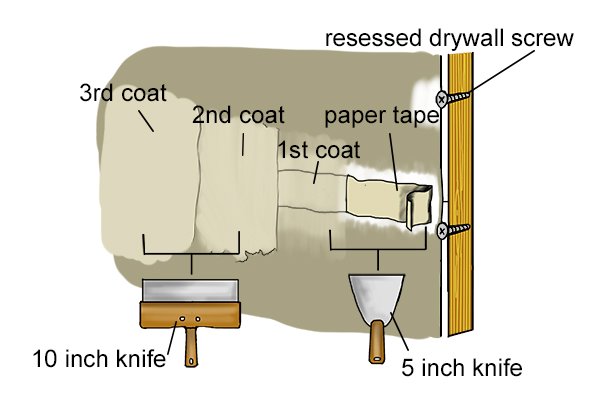
The taping knife is the tool of choice for embedding drywall tape. Its wide blade covers the seam and tape evenly, ensuring a strong bond and minimizing air bubbles. The flexibility helps feather the compound, blending it with the surrounding drywall.
Steps:
- Apply a thin layer of joint compound with a taping knife.
- Place drywall tape over the seam.
- Smooth and feather edges with the knife.
Applying First And Second Coats
After the tape is embedded, the first and second coats of compound are applied. Taping knives excel here, allowing users to extend the compound beyond the seam and feather edges for seamless transitions.
Example: For a 12-foot wall, a 10-inch taping knife can cover the seam in just a few passes, while a joint knife would require many more strokes, increasing labor time.
Detail Work And Patching
Joint knives shine in detail work, filling nail holes, patching cracks, and working around electrical outlets. Their compact size makes them ideal for precision tasks.
Example: When patching a small hole from a wall anchor, a joint knife allows accurate placement and smoothing of compound, preventing excess buildup.
Corners And Tight Spaces
Corners pose a challenge in drywall finishing. Joint knives, with their shorter blades, are perfect for maneuvering in these tight areas. Some professionals use specialty corner knives, but joint knives remain a common solution.
Pro Tip: Use a joint knife to apply compound in corners, then switch to a taping knife for final feathering.
Skim Coating Large Areas
Skim coating, the process of applying a thin layer of compound over an entire wall, requires the broad coverage of a taping knife. This technique is used to create smooth surfaces or hide imperfections.
Example: In my experience, using a 12-inch taping knife for skim coating cuts the project time in half compared to smaller knives, and the finish is noticeably smoother.
Pros And Cons: Taping Knife Vs Joint Knife
Every tool has advantages and limitations. The following breakdown helps clarify which knife to use for specific tasks.
Taping Knife Pros
- Wide coverage: Reduces labor time on large surfaces.
- Feathering capability: Essential for blending compound.
- Flexible blade: Adapts to wall contours.
Taping Knife Cons
- Bulky: Can be difficult in tight spaces.
- Learning curve: Requires skill to avoid ridges.
- Higher cost: Larger, premium knives are pricier.
Joint Knife Pros
- Precision: Ideal for detail work and corners.
- Easy to handle: Less fatigue for small repairs.
- Affordable: Generally cheaper than taping knives.
Joint Knife Cons
- Limited coverage: Slower for large areas.
- Less flexibility: Harder to feather compound.
- Not suitable for embedding tape: May cause uneven seams.
| Aspect | Taping Knife | Joint Knife |
|---|---|---|
| Efficiency on Large Areas | High | Low |
| Precision in Small Areas | Medium | High |
| Feathering Capability | Excellent | Limited |
| Ease of Use for Beginners | Moderate | Easy |
| Cost | Higher | Lower |
Real-world Examples And Case Studies
Examining practical scenarios helps illustrate the impact of tool selection on project outcomes.
Residential Drywall Installation
In a recent project, a contractor was tasked with finishing 2,000 square feet of new drywall. By using a combination of taping and joint knives, he completed the job in three days, achieving seamless joints and minimal sanding. The taping knife allowed for rapid coverage, while the joint knife was essential for corners and outlet cutouts.
Patch And Repair
A homeowner needed to repair several nail holes and a small crack in the living room wall. Using a joint knife, she was able to fill and smooth the imperfections quickly, with minimal mess. The taping knife was reserved for a larger seam repair, ensuring a smooth transition.
Commercial Renovation
During a commercial office renovation, the finishing crew used taping knives for all main seams and skim coating, while joint knives handled detail work around HVAC vents and window frames. The result was a uniform, high-quality finish across diverse surfaces.
Example: According to the Wikipedia entry on drywall, professional finishers often use a set of knives ranging from 4 inches to 14 inches, optimizing speed and precision.
Choosing The Right Knife For Your Project
Selecting the appropriate knife involves more than size; it requires considering task, skill level, and material preferences.
Assess Your Needs
- Large surfaces: Opt for taping knives (10, 14 inches).
- Detail work: Choose joint knives (3, 6 inches).
- Corners and tight spaces: Joint knives or specialty corner knives.
Consider Handle Comfort
Ergonomic handles reduce fatigue and improve control. For extended projects, invest in knives with soft grips and balanced weight.
Evaluate Blade Material
Stainless steel offers durability and corrosion resistance. Blue steel provides flexibility, which is crucial for feathering.
Budget And Quality
High-quality knives can last for years and improve finish results. While premium knives are costlier, they often pay off in reduced labor and superior outcomes.
Warning: Avoid cheap, poorly made knives, they can cause uneven finishes and increase sanding time.
Maintenance And Longevity
Proper care extends knife lifespan:
- Clean knives after each use
- Store in dry conditions
- Sharpen blades when necessary
Professional Tips For Optimal Results
The difference between an amateur and professional finish often lies in technique. These tips can help maximize performance from both knives.
Use The Right Knife For Each Stage
Switch knives as needed:
- Taping knife for embedding tape and finishing seams
- Joint knife for corners, repairs, and tight spaces
Feather Edges Carefully
Feathering is crucial for seamless joints. Apply compound with a taping knife, then blend edges outward with gentle pressure.
Avoid Overloading The Blade
Too much compound on the blade causes ridges and excess sanding. Apply moderate amounts and wipe excess frequently.
Maintain Tools Regularly
Clean blades after each session, inspect for nicks, and replace worn handles.
Practice Makes Perfect
Mastering drywall finishing takes practice. Experiment with different knives, angles, and pressures to find what works best for you.
Example: When I tested various knives, I found that a flexible taping knife significantly reduced sanding time, while a rigid joint knife made patching holes easier.
Comparison Table: Taping Knife Vs Joint Knife
A side-by-side comparison summarizes the most important distinctions.
| Feature | Taping Knife | Joint Knife |
|---|---|---|
| Blade Width | 6, 14 inches | 3, 6 inches |
| Flexibility | High | Low |
| Primary Task | Large joints, feathering | Small repairs, detail work |
| Ease of Use | Moderate | Easy |
| Typical Price | $10, $35 | $5, $15 |
| Durability | High (if stainless steel) | High (if stainless steel) |
| Common Users | Professionals, advanced DIYers | All skill levels |
Innovations And Trends In Drywall Knives
Advancements in tool design have made drywall finishing more efficient and comfortable. Manufacturers are responding to user feedback by introducing features aimed at reducing fatigue and improving results.
Ergonomic Improvements
Modern knives often feature:
- Soft-grip handles
- Balanced weight distribution
- Angled handles for less wrist strain
These changes help professionals work longer with fewer injuries.
Blade Technology
Some brands use high-carbon steel or composite materials for increased durability and flexibility. Non-stick coatings are also becoming common, making cleaning easier and reducing compound buildup.
Specialty Knives
Beyond standard taping and joint knives, specialty knives include:
- Corner knives for inside/outside corners
- Multi-purpose knives with interchangeable blades
- Hammer-end knives for setting nails
These innovations expand the toolset available to finishers, allowing more efficient workflow.
Sustainability
Manufacturers are focusing on sustainable materials and manufacturing processes, responding to the growing demand for eco-friendly tools.
Example: According to the USG Drywall Tools page, new models feature improved ergonomics and longer-lasting blades, making them suitable for both professionals and DIY enthusiasts.
Frequently Asked Questions
What Is The Main Difference Between A Taping Knife And A Joint Knife?
The taping knife is wider and more flexible, designed for covering large seams and feathering compound. The joint knife is narrower and more rigid, ideal for small repairs, corners, and detail work. Each serves a unique purpose, influencing the finish quality and efficiency of drywall projects.
Can I Use A Joint Knife For Taping Drywall Seams?
While a joint knife can apply compound to seams, it lacks the width and flexibility needed for proper feathering and blending. Using a joint knife for taping may result in visible ridges and uneven transitions. For best results, use a taping knife for seams and save the joint knife for detail work.
How Do I Maintain My Drywall Knives For Longevity?
To extend the lifespan of your knives:
- Clean blades after each use to prevent compound buildup
- Store in dry conditions to avoid rust
- Inspect for nicks or wear, replacing as needed
- Sharpen blades if necessary for optimal performance
Regular maintenance ensures consistent results and reduces tool replacement costs.
Are There Specialty Knives For Corners And Curves?
Yes, specialty knives such as corner knives and flexible knives are designed for specific tasks. Corner knives handle inside and outside corners, while flexible knives adapt to curved surfaces. These tools complement taping and joint knives, allowing for professional finishes in challenging areas.
What Should I Consider When Buying A Drywall Knife?
When purchasing a drywall knife, consider:
- Blade width and flexibility for the intended task
- Handle ergonomics for comfort and reduced fatigue
- Blade material (stainless steel or blue steel)
- Price and quality, premium knives offer better performance and durability
- Specialty features like hammer ends or non-stick coatings
Choosing the right knife ensures efficient workflow and superior results.
Selecting between a taping knife and a joint knife is more than a matter of preference, it’s a strategic decision that shapes the outcome of your drywall project. Each tool excels in its domain, and understanding their differences enables you to work efficiently, minimize sanding, and achieve professional results.
Whether you’re repairing a small crack or finishing an entire room, the right knife makes all the difference. By combining knowledge, experience, and proper tool selection, anyone can master the art of drywall finishing.